
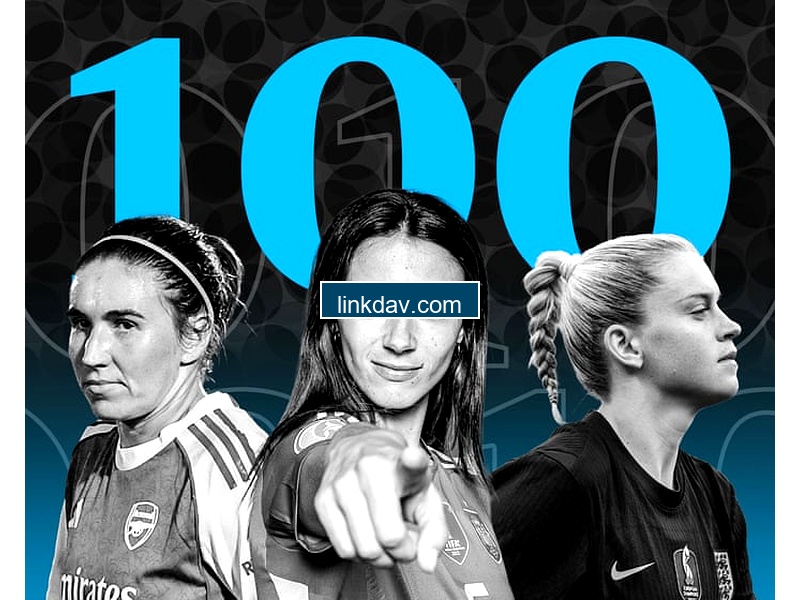
Four years ago, Aitana Bonmatí was the brilliant but quiet apprentice operating in the periphery of a Catalan machine, often obscured by the blinding supernova that was Alexia Putellas. She was the prince in waiting, the technician drifting into half-spaces while others hoisted the individual silverware and dominated the headlines. Today, that hierarchy has been completely inverted. The apprentice has not just taken the master’s seat; she has built a new throne entirely of her own design.
The release of the Guardian’s list of the 100 best female footballers for 2025 isn't merely a ranking; it is a declaration of a new world order. With 127 judges casting their votes—a jury of peers, legends, and tacticians—the verdict was resounding. Bonmatí stands alone at the summit. But the story here isn't just about the winner. It is about the shifting sands beneath her feet, the rise of the quiet genius in Mariona Caldentey, and the English lioness, Alessia Russo, finally baring her teeth at the very highest level.
The Architect of Chaos
To understand why Bonmatí retains her title as the planet's premier footballer, you have to look past the raw statistics. Yes, the goals are there, and the assists are plentiful. But her true value lies in the moments between the highlights. She is a footballer who plays the game as if she is watching it from the press box—seeing angles and avenues before they physically exist.
"Greatness is not just about brilliance; it is about consistency. Bonmatí doesn't just play matches; she scripts them."
In 2025, we have seen a version of Aitana that is sharper, meaner, and more direct. The "tiki-taka" DNA remains, but she has added a vertical lethality to her game. When the opposition parks the bus, she picks the lock. When the game becomes a chaotic transition battle, she puts her foot on the ball and slows the pulse of the entire stadium. This vote wasn't close because there is currently no one else who combines such artistic elegance with such ruthless efficiency. She is the villain to every defense she faces, yet the hero the sport demands.
The Shadow Steps into the Light
If Bonmatí is the lead singer, Mariona Caldentey has spent a career as the bassist—essential, rhythmic, but rarely given the spotlight solo. Seeing her voted into second place is perhaps the most satisfying narrative arc of this year's list. For years at Barcelona, and now at Arsenal, Caldentey has been the "footballer's footballer."
Her move to the Women's Super League was a gamble. Leaving the comfort of Catalonia to fight in the mud and rain of English football could have exposed her limitations. Instead, it showcased her genius. She didn't just adapt; she thrived.
- Tactical Versatility: Caldentey has operated as a winger, a false nine, and an interior midfielder, excelling in all roles.
- The Intelligence Factor: Her ability to manipulate space creates opportunities for others—a selfless trait that the 127 judges clearly decided to reward.
- Clutch Performance: In the biggest games against top-tier physical defenses, she has been the calmest head on the pitch.
This runner-up spot is a vindication for intelligence over athleticism. It proves that you don't need to be the fastest player on the pitch if your mind moves quicker than everyone else's legs. Caldentey’s rise signifies a maturation in how we view the game; we are finally looking away from the ball and watching the movement.
The English Predator
And then there is Alessia Russo. To break the Spanish duopoly at the top is no small feat. Finishing third places her firmly as the premier attacker in world football outside of the Spanish system. Russo’s journey has been one of immense pressure. The weight of the number 23 shirt for England, the high-profile transfer saga, and the expectation to deliver goals weekly at Arsenal could have crushed a lesser spirit.
Russo represents the modern striker. She is not a poacher who waits in the box; she is a tireless worker who presses from the front, drops deep to link play, and possesses a catalog of finishes ranging from thunderbolts to delicate backheels. Her inclusion in the top three is a signal flare for English football. It suggests that while Spain may dominate the technical midfield battle, the WSL is producing forwards who are physically dominant and technically refined enough to compete with anyone.
The Changing of the Guard
What does this list tell us about the tactical landscape of 2025? It tells us that the era of individual athleticism is yielding to the era of cognitive supremacy. The top two players are not physical monsters; they are spatial manipulators.
We are witnessing the final fading of the old guard—the icons of the 2010s who relied on pace and power are slipping down the rankings. In their place rises a generation raised on rondo, tactical periodization, and fluid positioning. The fact that the top two players share a Barcelona heritage—even if one has left—is a stark reminder that the Catalan philosophy remains the gold standard against which all other football is measured.
A Warning to the World
This ranking is more than a list; it is a forecast. For national teams preparing for the next cycle, the message is clear: if you cannot control the midfield, you cannot win. Bonmatí’s retention of the crown suggests that we are in for a dynasty, not a brief reign. She is not slowing down; she is evolving.
But for Russo and the chasers, the gap is narrowing. The narrative for the remainder of 2025 is set. It is the Queen in her castle against the wolves at the gate. Can Bonmatí maintain this level of perfection? Can Caldentey continue to shine away from home? Can Russo turn her podium finish into a title charge? The beauty of this sport lies in the uncertainty, but for now, the crown sits securely in Spain, and the queen looks comfortable on her throne.