
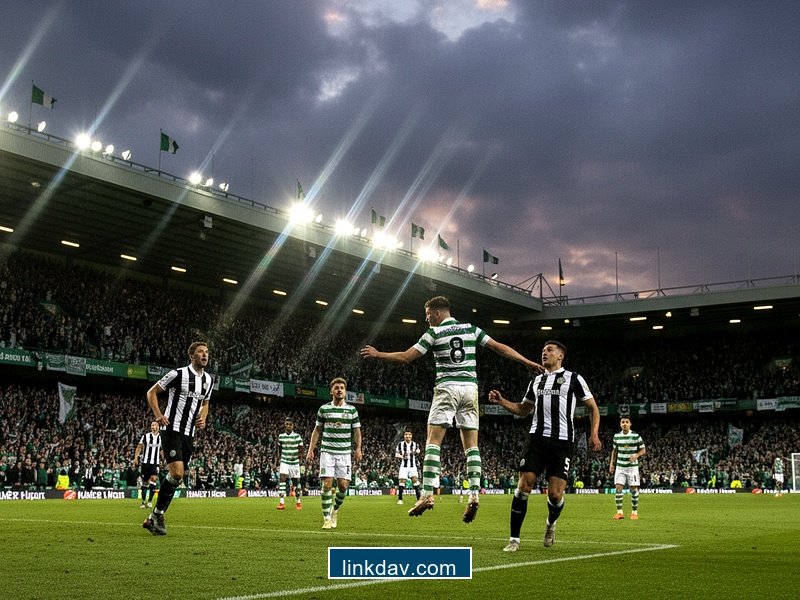
How many managers arrive in Glasgow understanding that patience is a commodity rarer than a quiet derby day, and that the currency of reputation can be devalued to zero in a single afternoon at Hampden? When you step into the technical area at Parkhead, you aren't just coaching a football team; you are managing a volatility index that reacts violently to the slightest deviation from dominance.
The narrative surrounding Wilfried Nancy’s tenure has been one of intrigue, tactical idealism, and cautious optimism. But as BBC Scotland’s Tom English rightly pointed out, the upcoming Premier Sports Cup final against St Mirren is not merely a chance for silverware. It is a guillotine waiting to drop. The suggestion that "the sky will fall in" if Celtic lose isn't hyperbole; it is a fundamental truth of the Glasgow goldfish bowl. In this city, second place in a final isn't a silver medal; it’s a P45 waiting to be printed.
The Economics of Momentum
Let’s look behind the curtain at what is actually at stake here. This isn't just about adding another trophy to the cabinet at Celtic Park. This is about the "buy-in" economy within the dressing room.
When a manager like Nancy comes in with a specific, highly structured philosophy—often distinct from the rugged pragmatism of the Scottish game—he is asking players to take a leap of faith. He is asking veterans who have won everything to learn new tricks, and he is asking new signings to adapt instantly.
"A win solidifies the method; a loss fractures the belief. If Celtic lift the cup, the players look at Nancy and think, 'This guy is a genius.' If they lose to St Mirren, those same players look at the tactics board and wonder if they are being led off a cliff."
The market value of a manager's authority is pegged directly to these moments. Whispers from Lennoxtown suggest the squad is receptive, but fragile. They need proof of concept. St Mirren provides the ultimate test case: a stubborn, organized opposition likely to cede possession and wait for a mistake. If Nancy’s system cannot dismantle a low block in a high-pressure environment, the murmurs of discontent will start before the team bus even leaves Mount Florida.
The Boardroom Calculus
From an insider perspective, the view from the boardroom is even more cynical. The Celtic board operates on a model of calculated risk. Hiring Nancy was a deviation from the 'safe pair of hands' approach. It was a move toward modern, continental coaching.
However, the board also knows that the January transfer window is looming. The outcome of this final dictates the strategy for the winter market.
- Scenario A (Victory): Nancy has capital. He can demand specific profiles to enhance a winning system. The board feels secure investing in 'project' players because the immediate pressure is off.
- Scenario B (Defeat): Panic sets in. The strategy shifts from long-term building to short-term appeasement. The board may be forced to sanction 'impact' signings just to quell the fan revolt, regardless of whether they fit the long-term vision.
Tom English’s assertion that the "sky will fall" speaks to this fragility. A loss doesn't just hurt pride; it destabilizes the financial and strategic planning for the next six months. It empowers the critics and weakens the manager's hand in negotiations—both with agents and his own CEO.
St Mirren: The dangerous variable
Make no mistake, Stephen Robinson and St Mirren are watching this narrative unfold with glee. They know all the pressure is in the green and white corner. St Mirren has transformed into a team that relishes the physical battle, the dark arts, and the disruption of rhythm.
Tactically, this is the nightmare matchup for a new Celtic manager trying to imprint a style. St Mirren will not engage in a football match; they will engage in a war of attrition. They will clog the midfield channels, force Celtic wide, and dare them to cross into a packed box.
The Psychological War
The longer the game stays 0-0, the heavier the Celtic shirts become. We have seen it a dozen times at Hampden. The crowd turns from expectant to anxious, and that anxiety bleeds onto the pitch. Passes that were crisp in the 10th minute become tentative in the 60th.
Nancy’s touchline demeanor will be scrutinized microscopically. If he panics, the team panics. If he remains stoic while the team struggles, he will be accused of passivity. It is a lose-lose situation unless the scoreline reads in his favor.
The Verdict: No Room for Error
The reality of managing Celtic is that you are judged not on your potential, but on your present. The honeymoon period for Wilfried Nancy is officially over the moment the whistle blows at Hampden.
If he wins, he buys himself the most valuable asset in football: time. Time to implement his philosophy, time to integrate players, and time to breathe without the suffocating weight of crisis talk.
But if he loses? The analysis will be brutal. The questions about his suitability for the Scottish game will move from the back pages to the front of the board's agenda. The sky might not literally fall, but in the micro-climate of Glasgow football, the storm clouds that gather after a cup final defeat against St Mirren can take years to clear. Nancy isn't just playing for a cup; he's playing for the right to govern without a vote of no confidence hanging over his head.
How many managers arrive in Glasgow understanding that patience is a commodity rarer than a quiet derby day, and that the currency of reputation can be devalued to zero in a single afternoon at Hampden? When you step into the technical area at Parkhead, you aren't just coaching a football team; you are managing a volatility index that reacts violently to the slightest deviation from dominance.
The narrative surrounding Wilfried Nancy’s tenure has been one of intrigue, tactical idealism, and cautious optimism. But as BBC Scotland’s Tom English rightly pointed out, the upcoming Premier Sports Cup final against St Mirren is not merely a chance for silverware. It is a guillotine waiting to drop. The suggestion that "the sky will fall in" if Celtic lose isn't hyperbole; it is a fundamental truth of the Glasgow goldfish bowl. In this city, second place in a final isn't a silver medal; it’s a P45 waiting to be printed.
The Economics of Momentum
Let’s look behind the curtain at what is actually at stake here. This isn't just about adding another trophy to the cabinet at Celtic Park. This is about the "buy-in" economy within the dressing room.
When a manager like Nancy comes in with a specific, highly structured philosophy—often distinct from the rugged pragmatism of the Scottish game—he is asking players to take a leap of faith. He is asking veterans who have won everything to learn new tricks, and he is asking new signings to adapt instantly.
"A win solidifies the method; a loss fractures the belief. If Celtic lift the cup, the players look at Nancy and think, 'This guy is a genius.' If they lose to St Mirren, those same players look at the tactics board and wonder if they are being led off a cliff."
The market value of a manager's authority is pegged directly to these moments. Whispers from Lennoxtown suggest the squad is receptive, but fragile. They need proof of concept. St Mirren provides the ultimate test case: a stubborn, organized opposition likely to cede possession and wait for a mistake. If Nancy’s system cannot dismantle a low block in a high-pressure environment, the murmurs of discontent will start before the team bus even leaves Mount Florida.
The Boardroom Calculus
From an insider perspective, the view from the boardroom is even more cynical. The Celtic board operates on a model of calculated risk. Hiring Nancy was a deviation from the 'safe pair of hands' approach. It was a move toward modern, continental coaching.
However, the board also knows that the January transfer window is looming. The outcome of this final dictates the strategy for the winter market.
- Scenario A (Victory): Nancy has capital. He can demand specific profiles to enhance a winning system. The board feels secure investing in 'project' players because the immediate pressure is off.
- Scenario B (Defeat): Panic sets in. The strategy shifts from long-term building to short-term appeasement. The board may be forced to sanction 'impact' signings just to quell the fan revolt, regardless of whether they fit the long-term vision.
Tom English’s assertion that the "sky will fall" speaks to this fragility. A loss doesn't just hurt pride; it destabilizes the financial and strategic planning for the next six months. It empowers the critics and weakens the manager's hand in negotiations—both with agents and his own CEO.
St Mirren: The dangerous variable
Make no mistake, Stephen Robinson and St Mirren are watching this narrative unfold with glee. They know all the pressure is in the green and white corner. St Mirren has transformed into a team that relishes the physical battle, the dark arts, and the disruption of rhythm.
Tactically, this is the nightmare matchup for a new Celtic manager trying to imprint a style. St Mirren will not engage in a football match; they will engage in a war of attrition. They will clog the midfield channels, force Celtic wide, and dare them to cross into a packed box.
The Psychological War
The longer the game stays 0-0, the heavier the Celtic shirts become. We have seen it a dozen times at Hampden. The crowd turns from expectant to anxious, and that anxiety bleeds onto the pitch. Passes that were crisp in the 10th minute become tentative in the 60th.
Nancy’s touchline demeanor will be scrutinized microscopically. If he panics, the team panics. If he remains stoic while the team struggles, he will be accused of passivity. It is a lose-lose situation unless the scoreline reads in his favor.
The Verdict: No Room for Error
The reality of managing Celtic is that you are judged not on your potential, but on your present. The honeymoon period for Wilfried Nancy is officially over the moment the whistle blows at Hampden.
If he wins, he buys himself the most valuable asset in football: time. Time to implement his philosophy, time to integrate players, and time to breathe without the suffocating weight of crisis talk.
But if he loses? The analysis will be brutal. The questions about his suitability for the Scottish game will move from the back pages to the front of the board's agenda. The sky might not literally fall, but in the micro-climate of Glasgow football, the storm clouds that gather after a cup final defeat against St Mirren can take years to clear. Nancy isn't just playing for a cup; he's playing for the right to govern without a vote of no confidence hanging over his head.