
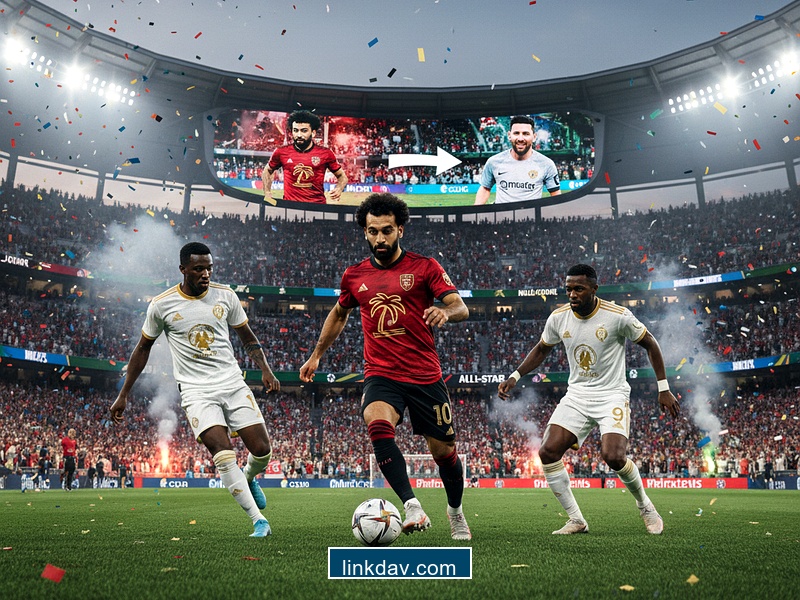
The team sheet for the San Siro hit the wires, and the vacuum where his name should have been felt heavier than the presence of any player actually starting. The whistle had barely blown on Liverpool’s Champions League showdown with Inter Milan before the real narrative began to unspool, not on the pitch, but in the shadowy corridors of transfer negotiation and public relations warfare. Mohamed Salah, the Egyptian King who has reigned over Anfield with an iron will and a velvet touch for the better part of a decade, was not merely rested. In the wake of a bombshell interview where he claimed to be "thrown under the bus," his absence felt less like a tactical decision and more like the first sentence of an obituary for an era.
We are witnessing the messy, inevitable disintegration that often befalls the great dynasties of English football. It is rarely clean. It is rarely quiet. And now, two global superpowers—Major League Soccer and the Saudi Pro League—are circling the wreckage, ready to fight a transfer war that represents the shifting tectonic plates of the global game.
The Geopolitics of a Swan Song
Decades ago, when a Liverpool legend’s legs began to betray his mind, the path was predictable. He might move to a mid-table side, perhaps a sunny sojourn in the NASL, or a player-manager role in the lower leagues. Today, the departure of a player like Salah is a geopolitical event. The news that MLS chiefs are urging Salah to "reach out to Messi" is not just friendly advice; it is a declaration of intent.
On one side, you have the United States, riding the crest of the Messi wave, preparing for the 2026 World Cup, and desperate to add another crown jewel to its domestic league. The narrative writes itself: the two greatest forwards of their generation, illuminating the American twilight.
"The lure of the MLS is no longer just about retirement; it is about brand expansion in the world's largest media market. Yet, the gravitational pull of the Saudi Pro League for the most famous Arab athlete in history cannot be overstated."
On the other side lies Saudi Arabia. For years, it has felt predetermined that Salah would eventually grace the Pro League. It is not merely about the astronomical wealth, though that plays its part. It is about culture, language, and proximity to home. For the Saudi project, landing Salah would be the ultimate validation, surpassing even the arrival of Cristiano Ronaldo.
Echoes of Anfield Exits Past
To understand the gravity of this moment, one must look backward. Liverpool Football Club has survived the departure of gods before. In 1977, Kevin Keegan, the superstar of his day, left for Hamburg. The Kop despaired, believing the magic was gone. Then, a Scotsman named Kenny Dalglish arrived, and the club reached even dizzier heights. When Ian Rush left for Juventus, the goals dried up temporarily, but the machine rumbled on.
However, this situation feels distinctively caustic. The interview where Salah claimed he was "thrown under the bus" bears a striking resemblance to the acrimony that surrounded Raheem Sterling's exit, or perhaps the cold realization of the Fernando Torres departure. But Salah is not a rising star or a mercenary; he is the architect of the modern Liverpool.
- Kevin Keegan (1977): Left at his peak. The club reinvented itself immediately.
- Steve McManaman (1999): A Bosman exit that left a bitter financial taste, a harbinger of player power.
- Luis Suarez (2014): A talent too big to contain, but his exit led to a tactical collapse under Rodgers.
- Mo Salah (2025?): The dismantling of the last pillar of the Klopp empire.
The Arne Slot Dilemma
This friction places Arne Slot in an unenviable position. History tells us that new managers often need to slay the sacred cows of the previous regime to truly establish authority. Pep Guardiola did it with Joe Hart and Yaya Toure. Mikel Arteta did it with Pierre-Emerick Aubameyang.
By axing Salah for the Inter Milan clash, Slot has drawn a line in the sand. He is prioritizing the collective system over the individual icon. It is a gamble of immense proportions. If Liverpool wins, Slot is strong; if they falter, he has alienated the greatest goalscorer the club has seen in the Premier League era.
The Verdict: An Irreversible Fracture?
Is this a turning point? Undeniably. The public nature of the dispute, combined with the circling vultures of the MLS and Saudi Arabia, suggests there is no turning back. Relationships in football are fragile ecosystems; once the trust is polluted by public accusations of betrayal, it rarely recovers.
The tragedy here is not that Salah will leave—all players leave—but *how* he is leaving. We are watching the messy divorce of a couple everyone assumed would stay together for the kids. The tactical landscape will shift; Liverpool will likely become more collective, less reliant on moments of individual Egyptian brilliance. But the soul of the team will change.
As the MLS and Saudi Pro League prepare their chequebooks, Liverpool fans are left with the melancholy realization that the golden sunset they envisioned for their King is being obscured by storm clouds. The history books will record the goals, the trophies, and the glory. But the f
The team sheet for the San Siro hit the wires, and the vacuum where his name should have been felt heavier than the presence of any player actually starting. The whistle had barely blown on Liverpool’s Champions League showdown with Inter Milan before the real narrative began to unspool, not on the pitch, but in the shadowy corridors of transfer negotiation and public relations warfare. Mohamed Salah, the Egyptian King who has reigned over Anfield with an iron will and a velvet touch for the better part of a decade, was not merely rested. In the wake of a bombshell interview where he claimed to be "thrown under the bus," his absence felt less like a tactical decision and more like the first sentence of an obituary for an era.
We are witnessing the messy, inevitable disintegration that often befalls the great dynasties of English football. It is rarely clean. It is rarely quiet. And now, two global superpowers—Major League Soccer and the Saudi Pro League—are circling the wreckage, ready to fight a transfer war that represents the shifting tectonic plates of the global game.
The Geopolitics of a Swan Song
Decades ago, when a Liverpool legend’s legs began to betray his mind, the path was predictable. He might move to a mid-table side, perhaps a sunny sojourn in the NASL, or a player-manager role in the lower leagues. Today, the departure of a player like Salah is a geopolitical event. The news that MLS chiefs are urging Salah to "reach out to Messi" is not just friendly advice; it is a declaration of intent.
On one side, you have the United States, riding the crest of the Messi wave, preparing for the 2026 World Cup, and desperate to add another crown jewel to its domestic league. The narrative writes itself: the two greatest forwards of their generation, illuminating the American twilight.
"The lure of the MLS is no longer just about retirement; it is about brand expansion in the world's largest media market. Yet, the gravitational pull of the Saudi Pro League for the most famous Arab athlete in history cannot be overstated."
On the other side lies Saudi Arabia. For years, it has felt predetermined that Salah would eventually grace the Pro League. It is not merely about the astronomical wealth, though that plays its part. It is about culture, language, and proximity to home. For the Saudi project, landing Salah would be the ultimate validation, surpassing even the arrival of Cristiano Ronaldo.
Echoes of Anfield Exits Past
To understand the gravity of this moment, one must look backward. Liverpool Football Club has survived the departure of gods before. In 1977, Kevin Keegan, the superstar of his day, left for Hamburg. The Kop despaired, believing the magic was gone. Then, a Scotsman named Kenny Dalglish arrived, and the club reached even dizzier heights. When Ian Rush left for Juventus, the goals dried up temporarily, but the machine rumbled on.
However, this situation feels distinctively caustic. The interview where Salah claimed he was "thrown under the bus" bears a striking resemblance to the acrimony that surrounded Raheem Sterling's exit, or perhaps the cold realization of the Fernando Torres departure. But Salah is not a rising star or a mercenary; he is the architect of the modern Liverpool.
- Kevin Keegan (1977): Left at his peak. The club reinvented itself immediately.
- Steve McManaman (1999): A Bosman exit that left a bitter financial taste, a harbinger of player power.
- Luis Suarez (2014): A talent too big to contain, but his exit led to a tactical collapse under Rodgers.
- Mo Salah (2025?): The dismantling of the last pillar of the Klopp empire.
The Arne Slot Dilemma
This friction places Arne Slot in an unenviable position. History tells us that new managers often need to slay the sacred cows of the previous regime to truly establish authority. Pep Guardiola did it with Joe Hart and Yaya Toure. Mikel Arteta did it with Pierre-Emerick Aubameyang.
By axing Salah for the Inter Milan clash, Slot has drawn a line in the sand. He is prioritizing the collective system over the individual icon. It is a gamble of immense proportions. If Liverpool wins, Slot is strong; if they falter, he has alienated the greatest goalscorer the club has seen in the Premier League era.
The Verdict: An Irreversible Fracture?
Is this a turning point? Undeniably. The public nature of the dispute, combined with the circling vultures of the MLS and Saudi Arabia, suggests there is no turning back. Relationships in football are fragile ecosystems; once the trust is polluted by public accusations of betrayal, it rarely recovers.
The tragedy here is not that Salah will leave—all players leave—but *how* he is leaving. We are watching the messy divorce of a couple everyone assumed would stay together for the kids. The tactical landscape will shift; Liverpool will likely become more collective, less reliant on moments of individual Egyptian brilliance. But the soul of the team will change.
As the MLS and Saudi Pro League prepare their chequebooks, Liverpool fans are left with the melancholy realization that the golden sunset they envisioned for their King is being obscured by storm clouds. The history books will record the goals, the trophies, and the glory. But the f