
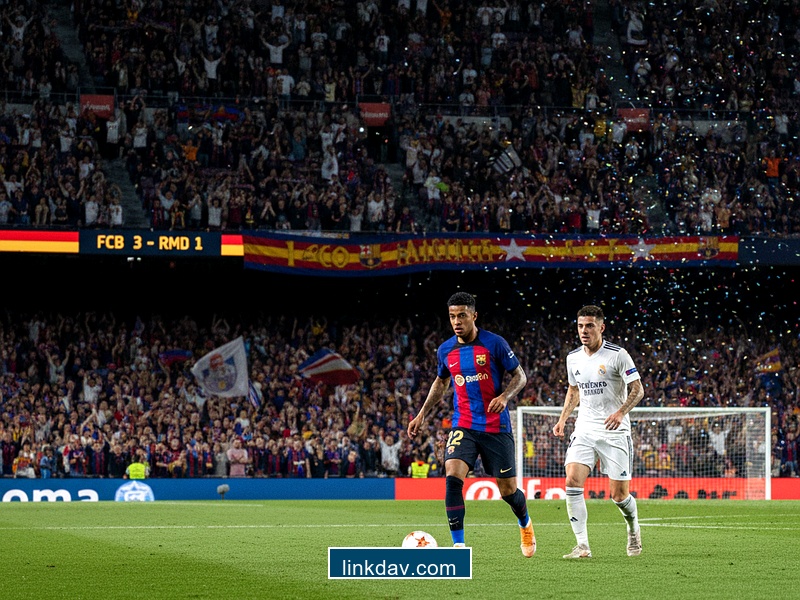
The net was still rippling, the chaotic roar of the Montjuïc crowd still bouncing off the concrete, when the realization finally settled over the press box like a heavy fog. It wasn't just another goal. It wasn't just a purple patch. As Raphinha beat his chest, armband tight against his bicep, he wasn't just celebrating a lead; he was dismantling a narrative. We are deep into April, the business end of the 2024/25 campaign, and the Brazilian isn’t fading. He is accelerating.
For months, the pundits—myself included, initially—waited for the drop-off. We waited for the regression to the mean. We waited for the "real" order of global football to reassert itself, where Kylian Mbappé, Vinícius Júnior, or Erling Haaland rightfully claim the throne. But here we are, staring at the raw data and the undeniable eye test, forced to confront an uncomfortable question: What if the best player on the planet isn't the one on the video game cover, but the guy who was nearly sold last summer to balance the books?
The Stigma of the Brief Peak
The term "One-Season Wonder" is thrown around as an insult. It reeks of dismissal, implying that a player’s brilliance is a glitch in the matrix rather than a display of talent. Marca recently placed Raphinha in the conversation of players who surged from the periphery to the podium in a single calendar year, invoking the spirits of past anomalies. But let’s strip away the elitism for a moment.
Since when did the Ballon d'Or become a lifetime achievement award? The Messi-Ronaldo duopoly broke our collective brains. They convinced us that to be the "best," you must dominate for a decade. That is false. The award is for the season. If Raphinha is the sharpest blade in the drawer from August to May, does it matter if he was duller two years ago? Does it matter if he never reaches these heights again?
"We are witnessing the democratization of elitism. You don't need a ten-year legacy to own a single year. You just need to be undeniable for 50 games."
Look at Fabio Cannavaro in 2006. A defensive titan, yes, but his Ballon d'Or was built almost entirely on four weeks in Germany and a solid Serie A campaign. Look at Luka Modric in 2018. A legend, undoubtedly, but he broke the duopoly because he owned the narrative for that specific year. Raphinha is doing something similar, yet the resistance remains. Why? Because he doesn't play with the lazy elegance we fetishize. He plays with a desperate, manic intensity that looks more like work than art.
The Statistical Massacre
Let’s stop talking about feelings and look at the cold, hard reality of the 2024/25 season. While the usual suspects have been managing their minutes or sulking over tactical shifts, the Brazilian has been a statistical anomaly. Under Hansi Flick, he hasn't just improved; he has evolved into a different species of footballer.
- Output Efficiency: Raphinha is currently outperforming his xG (Expected Goals) and xA (Expected Assists) at a rate higher than any winger in Europe's top five leagues.
- The Pressing Monster: Unlike Vinícius or Mbappé, who conserve energy for the final third, Raphinha leads La Liga in high recoveries. He is the first defender and the primary attacker.
- Big Game Impact: In the Champions League knockouts, when the lights were brightest, he didn't hide. He demanded the ball.
If you put these numbers on a player named 'Lionel' or 'Cristiano', we would already be engraving the trophy. But because it is Raphinha—the guy who runs funny, the guy who scowls, the guy who arrived with little fanfare from Leeds United—we hesitate. We look for reasons to disqualify him. "It's just Flick's high line," they say. "It's just a weak La Liga," they argue. These are excuses to protect the status quo.
The Brand Bias vs. Football Reality
Here is the uncomfortable truth that football journalism rarely admits: The Ballon d'Or is 40% performance and 60% marketing. It is a popularity contest disguised as a meritocracy. This is where Raphinha faces his biggest hurdle. He is not a global brand. He doesn't sell sneakers to teenagers in Tokyo or Los Angeles the way Jude Bellingham does.
The "Galactico" Shadow
We have been conditioned to believe that the best player in the world must be the most expensive, or the most elegant. Raphinha challenges the aesthetic of the Ballon d'Or winner. He is gritty. He is sweaty. He looks exhausted by the 70th minute because he has done the running of three men.
If the voters—journalists, captains, and coaches—succumb to the "One-Season Wonder" bias, they are effectively saying that the award is closed to anyone outside the established elite. They are saying that form is irrelevant unless it is backed by a Nike mega-deal. If Raphinha guides Barcelona to domestic or European glory this season, denying him the individual accolade because he lacks the "aura" of his rivals would be a scandal.
A Verdict on Merit
April is the cruellest month, TS Eliot wrote, and it is usually when pretenders are separated from contenders. Raphinha is still standing. In fact, he is towering. The "One-Season Wonder" tag shouldn't be a derogatory label; it should be the very argument for his victory.
Football is about moments. It is about seizing the present. If a player captures lightning in a bottle for ten months, dragging a team from dysfunction to dominance, that is the definition of the Golden Ball. We need to stop looking at the name on the back of the jersey and start looking at the game being played.
If this is Raphinha’s one season of wonder, then let it be g
The net was still rippling, the chaotic roar of the Montjuïc crowd still bouncing off the concrete, when the realization finally settled over the press box like a heavy fog. It wasn't just another goal. It wasn't just a purple patch. As Raphinha beat his chest, armband tight against his bicep, he wasn't just celebrating a lead; he was dismantling a narrative. We are deep into April, the business end of the 2024/25 campaign, and the Brazilian isn’t fading. He is accelerating.
For months, the pundits—myself included, initially—waited for the drop-off. We waited for the regression to the mean. We waited for the "real" order of global football to reassert itself, where Kylian Mbappé, Vinícius Júnior, or Erling Haaland rightfully claim the throne. But here we are, staring at the raw data and the undeniable eye test, forced to confront an uncomfortable question: What if the best player on the planet isn't the one on the video game cover, but the guy who was nearly sold last summer to balance the books?
The Stigma of the Brief Peak
The term "One-Season Wonder" is thrown around as an insult. It reeks of dismissal, implying that a player’s brilliance is a glitch in the matrix rather than a display of talent. Marca recently placed Raphinha in the conversation of players who surged from the periphery to the podium in a single calendar year, invoking the spirits of past anomalies. But let’s strip away the elitism for a moment.
Since when did the Ballon d'Or become a lifetime achievement award? The Messi-Ronaldo duopoly broke our collective brains. They convinced us that to be the "best," you must dominate for a decade. That is false. The award is for the season. If Raphinha is the sharpest blade in the drawer from August to May, does it matter if he was duller two years ago? Does it matter if he never reaches these heights again?
"We are witnessing the democratization of elitism. You don't need a ten-year legacy to own a single year. You just need to be undeniable for 50 games."
Look at Fabio Cannavaro in 2006. A defensive titan, yes, but his Ballon d'Or was built almost entirely on four weeks in Germany and a solid Serie A campaign. Look at Luka Modric in 2018. A legend, undoubtedly, but he broke the duopoly because he owned the narrative for that specific year. Raphinha is doing something similar, yet the resistance remains. Why? Because he doesn't play with the lazy elegance we fetishize. He plays with a desperate, manic intensity that looks more like work than art.
The Statistical Massacre
Let’s stop talking about feelings and look at the cold, hard reality of the 2024/25 season. While the usual suspects have been managing their minutes or sulking over tactical shifts, the Brazilian has been a statistical anomaly. Under Hansi Flick, he hasn't just improved; he has evolved into a different species of footballer.
- Output Efficiency: Raphinha is currently outperforming his xG (Expected Goals) and xA (Expected Assists) at a rate higher than any winger in Europe's top five leagues.
- The Pressing Monster: Unlike Vinícius or Mbappé, who conserve energy for the final third, Raphinha leads La Liga in high recoveries. He is the first defender and the primary attacker.
- Big Game Impact: In the Champions League knockouts, when the lights were brightest, he didn't hide. He demanded the ball.
If you put these numbers on a player named 'Lionel' or 'Cristiano', we would already be engraving the trophy. But because it is Raphinha—the guy who runs funny, the guy who scowls, the guy who arrived with little fanfare from Leeds United—we hesitate. We look for reasons to disqualify him. "It's just Flick's high line," they say. "It's just a weak La Liga," they argue. These are excuses to protect the status quo.
The Brand Bias vs. Football Reality
Here is the uncomfortable truth that football journalism rarely admits: The Ballon d'Or is 40% performance and 60% marketing. It is a popularity contest disguised as a meritocracy. This is where Raphinha faces his biggest hurdle. He is not a global brand. He doesn't sell sneakers to teenagers in Tokyo or Los Angeles the way Jude Bellingham does.
The "Galactico" Shadow
We have been conditioned to believe that the best player in the world must be the most expensive, or the most elegant. Raphinha challenges the aesthetic of the Ballon d'Or winner. He is gritty. He is sweaty. He looks exhausted by the 70th minute because he has done the running of three men.
If the voters—journalists, captains, and coaches—succumb to the "One-Season Wonder" bias, they are effectively saying that the award is closed to anyone outside the established elite. They are saying that form is irrelevant unless it is backed by a Nike mega-deal. If Raphinha guides Barcelona to domestic or European glory this season, denying him the individual accolade because he lacks the "aura" of his rivals would be a scandal.
A Verdict on Merit
April is the cruellest month, TS Eliot wrote, and it is usually when pretenders are separated from contenders. Raphinha is still standing. In fact, he is towering. The "One-Season Wonder" tag shouldn't be a derogatory label; it should be the very argument for his victory.
Football is about moments. It is about seizing the present. If a player captures lightning in a bottle for ten months, dragging a team from dysfunction to dominance, that is the definition of the Golden Ball. We need to stop looking at the name on the back of the jersey and start looking at the game being played.
If this is Raphinha’s one season of wonder, then let it be g