
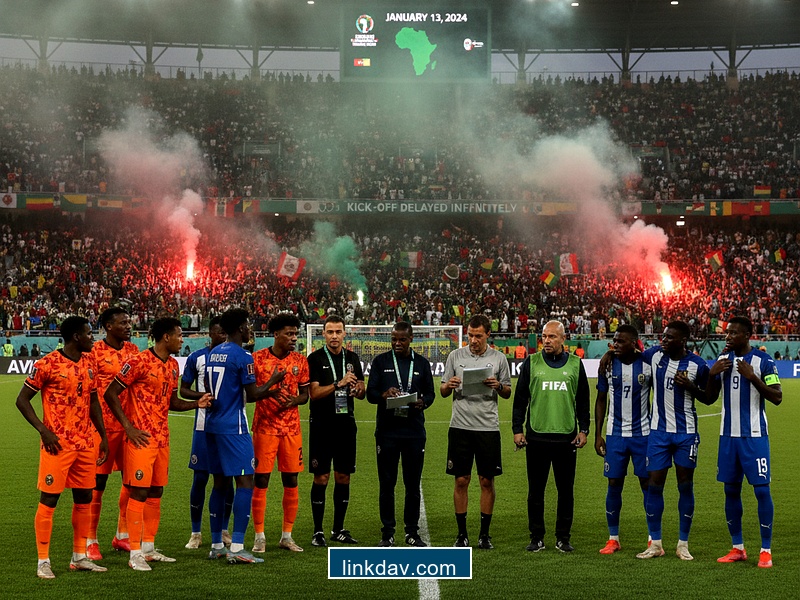
Let’s cut through the diplomatic fog and call this what it is: a disgrace. The Africa Cup of Nations (AFCON) is not a reserve league tournament. It is the premier continental showpiece for millions of people, a tournament rich in history and overflowing with talent. Yet, the governing bodies of world football treat it with the same respect usually reserved for a pre-season friendly in a parking lot.
News broke this week that FIFA, in their infinite wisdom, has bowed to the pressure of the European Club Association (ECA). The "compromise"? European clubs can now hold onto their African stars until January 3. With the tournament kicking off in Cameroon on January 9, this leaves national teams with less than a week to gather, train, travel, and acclimatize.
This is not an administrative quirk. It is a calculated sabotage of a major international tournament. If you think this is about "player welfare" or "covid protocols," you are being willfully naive. This is about power, money, and the arrogant belief that European club football matters more than African national heritage.
The Double Standard: Imagine This Happening to England
Let’s play a game of hypotheticals. Imagine the UEFA European Championship is around the corner. Imagine FIFA telling Gareth Southgate, Didier Deschamps, or Hansi Flick that they cannot have their players until six days before the opening match because the Premier League or La Liga wants to squeeze in one more fixture.
The uproar would be deafening. The threats of lawsuits would fly faster than a Kylian Mbappé sprint. Pundits would foam at the mouth about the "sanctity of the international game." Yet, when it happens to Senegal, Egypt, or Algeria, the narrative shifts. Suddenly, it’s about "compromise." It is patronizing in the extreme.
For the Euros or the World Cup, the mandatory release period is roughly 14 days. This allows for rest, tactical drilling, and team bonding. By slashing this window to practically zero for AFCON, FIFA is effectively saying that African teams do not deserve the same professional courtesy. They are setting these teams up to fail, forcing them to play disjointed football, and then, inevitably, the same critics will sneer that the tournament "lacks tactical discipline."
Deep Dive: The Tactical Sabotage
The implications of this decision go far beyond hurt feelings; they strike at the very mechanics of how a football team operates. Modern football is a game of systems. It requires pressing triggers, defensive shape, and set-piece coordination. You do not build that over a Zoom call while your captain is playing for Liverpool in London.
Consider the climatic shift. Players will be flying from the European winter—playing in temperatures hovering around freezing—to the heat and humidity of Cameroon. Physiological adaptation takes time. By arriving on January 4th or 5th, players are being thrown into high-intensity competition without adequate physical adjustment. This skyrockets the risk of soft-tissue injuries.
Furthermore, this ruling disproportionately affects the "smaller" nations. Teams like Egypt or Senegal rely heavily on a core of European-based superstars to lift the level of their domestic-based squads. If Mohamed Salah or Sadio Mané arrive three days before the first whistle, they are parachuting into a squad they haven't trained with in months. It turns the national team coach into a glorified babysitter, stripping them of the ability to actually manage.
The Stat Pack: The Impossible Turnaround
To illustrate the absurdity of this schedule, let’s look at the timeline facing some of the Premier League's biggest assets. The marquee matchup between Chelsea and Liverpool takes place on January 2. Under the new rule, these players play a massive club game, fly thousands of miles, and are expected to perform at an international tournament immediately.
| Player | Club Fixture (Jan 2/3) | National Team | AFCON Opener | Real Prep Days |
|---|---|---|---|---|
| Mo Salah | vs Chelsea | Egypt | Jan 11 vs Nigeria | ~5 Days |
| Sadio Mané | vs Chelsea | Senegal | Jan 10 vs Zimbabwe | ~4 Days |
| Edouard Mendy | vs Liverpool | Senegal | Jan 10 vs Zimbabwe | ~4 Days |
| Riyad Mahrez | vs Arsenal (Jan 1) | Algeria | Jan 11 vs Sierra Leone | ~6 Days |
Look at those numbers. "Real Prep Days" includes travel, recovery from the Premier League game, and media duties. Actual training time on the grass? Perhaps two sessions. It is a logistical nightmare designed to benefit the clubs while pretending to support the confederation.
Fan Pulse: Fury Meets Indifference
The reaction to this decision exposes the massive divide in global football culture. Scroll through the timelines of African football Twitter, and you find righteous indignation. There is a sense of exhaustion—a feeling that no matter how much talent the continent exports, the respect never returns to the source. Fans of the Super Eagles or the Pharaohs view this as an attempt to dilute the quality of their tournament.
"They want our talent, they want our goals, but they don't want our culture or our competitions. They treat AFCON like a nuisance." — Common sentiment across CAF fan forums.
Contrast this with the mood in England. The overwhelming sentiment among Premier League fans is relief. They do not care about the integrity of AFCON; they care about Liverpool dropping points in the title race. It highlights a brutal truth: for many European fans, international football is only relevant when it involves their own nation. Everything else is just an obstacle to their club's domestic ambition.
The Verdict: A Dangerous Precedent
This row brewing before a ball has been kicked is not just about scheduling. It is a battle for the soul of the international game. By capitulating to the European clubs, FIFA has confirmed the hierarchy. The clubs hold the whip hand; the confederations must beg for scraps.
If AFCON is to be respected, it cannot be treated as a secondary event that must fit neatly around the Premier League's festive fixtures. The tournament deserves better. The players, torn between employer loyalty and national pride, des
Let’s cut through the diplomatic fog and call this what it is: a disgrace. The Africa Cup of Nations (AFCON) is not a reserve league tournament. It is the premier continental showpiece for millions of people, a tournament rich in history and overflowing with talent. Yet, the governing bodies of world football treat it with the same respect usually reserved for a pre-season friendly in a parking lot.
News broke this week that FIFA, in their infinite wisdom, has bowed to the pressure of the European Club Association (ECA). The "compromise"? European clubs can now hold onto their African stars until January 3. With the tournament kicking off in Cameroon on January 9, this leaves national teams with less than a week to gather, train, travel, and acclimatize.
This is not an administrative quirk. It is a calculated sabotage of a major international tournament. If you think this is about "player welfare" or "covid protocols," you are being willfully naive. This is about power, money, and the arrogant belief that European club football matters more than African national heritage.
The Double Standard: Imagine This Happening to England
Let’s play a game of hypotheticals. Imagine the UEFA European Championship is around the corner. Imagine FIFA telling Gareth Southgate, Didier Deschamps, or Hansi Flick that they cannot have their players until six days before the opening match because the Premier League or La Liga wants to squeeze in one more fixture.
The uproar would be deafening. The threats of lawsuits would fly faster than a Kylian Mbappé sprint. Pundits would foam at the mouth about the "sanctity of the international game." Yet, when it happens to Senegal, Egypt, or Algeria, the narrative shifts. Suddenly, it’s about "compromise." It is patronizing in the extreme.
For the Euros or the World Cup, the mandatory release period is roughly 14 days. This allows for rest, tactical drilling, and team bonding. By slashing this window to practically zero for AFCON, FIFA is effectively saying that African teams do not deserve the same professional courtesy. They are setting these teams up to fail, forcing them to play disjointed football, and then, inevitably, the same critics will sneer that the tournament "lacks tactical discipline."
Deep Dive: The Tactical Sabotage
The implications of this decision go far beyond hurt feelings; they strike at the very mechanics of how a football team operates. Modern football is a game of systems. It requires pressing triggers, defensive shape, and set-piece coordination. You do not build that over a Zoom call while your captain is playing for Liverpool in London.
Consider the climatic shift. Players will be flying from the European winter—playing in temperatures hovering around freezing—to the heat and humidity of Cameroon. Physiological adaptation takes time. By arriving on January 4th or 5th, players are being thrown into high-intensity competition without adequate physical adjustment. This skyrockets the risk of soft-tissue injuries.
Furthermore, this ruling disproportionately affects the "smaller" nations. Teams like Egypt or Senegal rely heavily on a core of European-based superstars to lift the level of their domestic-based squads. If Mohamed Salah or Sadio Mané arrive three days before the first whistle, they are parachuting into a squad they haven't trained with in months. It turns the national team coach into a glorified babysitter, stripping them of the ability to actually manage.
The Stat Pack: The Impossible Turnaround
To illustrate the absurdity of this schedule, let’s look at the timeline facing some of the Premier League's biggest assets. The marquee matchup between Chelsea and Liverpool takes place on January 2. Under the new rule, these players play a massive club game, fly thousands of miles, and are expected to perform at an international tournament immediately.
| Player | Club Fixture (Jan 2/3) | National Team | AFCON Opener | Real Prep Days |
|---|---|---|---|---|
| Mo Salah | vs Chelsea | Egypt | Jan 11 vs Nigeria | ~5 Days |
| Sadio Mané | vs Chelsea | Senegal | Jan 10 vs Zimbabwe | ~4 Days |
| Edouard Mendy | vs Liverpool | Senegal | Jan 10 vs Zimbabwe | ~4 Days |
| Riyad Mahrez | vs Arsenal (Jan 1) | Algeria | Jan 11 vs Sierra Leone | ~6 Days |
Look at those numbers. "Real Prep Days" includes travel, recovery from the Premier League game, and media duties. Actual training time on the grass? Perhaps two sessions. It is a logistical nightmare designed to benefit the clubs while pretending to support the confederation.
Fan Pulse: Fury Meets Indifference
The reaction to this decision exposes the massive divide in global football culture. Scroll through the timelines of African football Twitter, and you find righteous indignation. There is a sense of exhaustion—a feeling that no matter how much talent the continent exports, the respect never returns to the source. Fans of the Super Eagles or the Pharaohs view this as an attempt to dilute the quality of their tournament.
"They want our talent, they want our goals, but they don't want our culture or our competitions. They treat AFCON like a nuisance." — Common sentiment across CAF fan forums.
Contrast this with the mood in England. The overwhelming sentiment among Premier League fans is relief. They do not care about the integrity of AFCON; they care about Liverpool dropping points in the title race. It highlights a brutal truth: for many European fans, international football is only relevant when it involves their own nation. Everything else is just an obstacle to their club's domestic ambition.
The Verdict: A Dangerous Precedent
This row brewing before a ball has been kicked is not just about scheduling. It is a battle for the soul of the international game. By capitulating to the European clubs, FIFA has confirmed the hierarchy. The clubs hold the whip hand; the confederations must beg for scraps.
If AFCON is to be respected, it cannot be treated as a secondary event that must fit neatly around the Premier League's festive fixtures. The tournament deserves better. The players, torn between employer loyalty and national pride, des