
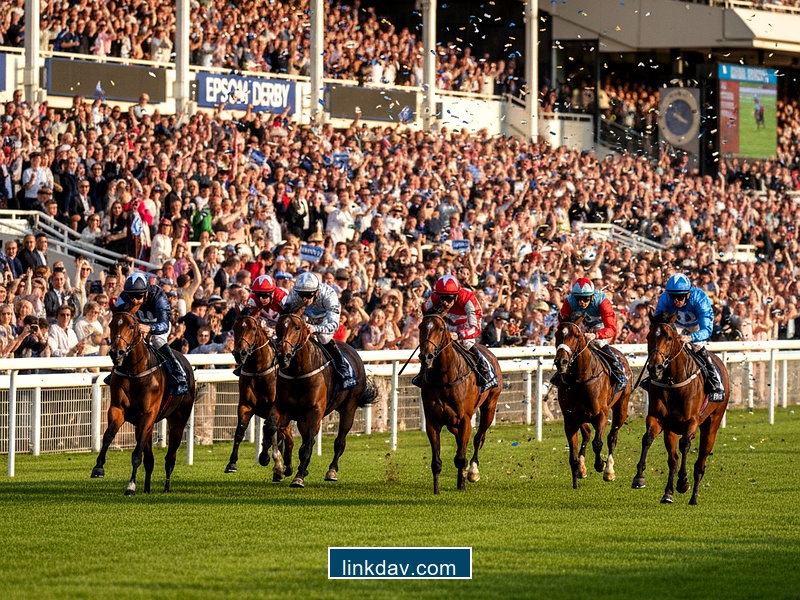
Let’s cut through the polished press releases and the polite applause of the paddock. The Epsom Derby, once the crown jewel of the British sporting summer, is on life support. The decision by The Jockey Club to bring in Frank Warren and his Queensberry Promotions team—the architects of heavyweight boxing chaos—is not a strategic partnership. It is a scream for help. It is the sporting equivalent of the Royal Opera House hiring the WWE to fix their ticket sales.
For years, racing has been suffocating under the weight of its own tweed-jacketed pretension, oblivious to the fact that the modern sports fan has moved on. The "Sport of Kings" has become the "Pastime of Pensioners." Now, faced with dwindling crowds and a distinct lack of cultural relevance, they have turned to the man who made Tyson Fury a global icon. But here is the uncomfortable truth: Frank Warren can sell a fight because violence sells itself. Can he sell a horse race to a generation that views the sport as an ethical minefield and a bore? I have my doubts.
The Smell of Desperation: Why Now?
This move is an admission of failure. For decades, The Jockey Club has relied on tradition, assuming that the mere existence of the Derby was enough to command attention. They were wrong. The decline in attendance at Epsom isn't a blip; it is a trend line pointing straight into the abyss.
Why does this matter? Because sports live and die by the "event." Formula 1 understood this, transforming from a procession of cars into a Netflix-fueled lifestyle brand. Boxing understood this, turning weigh-ins into viral content. Horse racing, meanwhile, has remained stubbornly analogue in a digital world. Bringing in Queensberry is an attempt to inject artificial adrenaline into a patient with a failing heart.
The Jockey Club is hoping for the "Warren Effect"—loud noises, bright lights, and crossover appeal. They want the casual punter who bets on football accumulators to suddenly care about furlongs and fetlocks. But this ignores the fundamental disconnect: Boxing is visceral human drama. Racing is, to the uninitiated, 30 minutes of waiting for two minutes of confusion. You cannot promo a horse into having a personality. You cannot put a microphone in front of the favourite and have him call out the underdog's mother. The tools Warren uses to build anticipation simply do not exist in the equine world.
The Stat Pack: Anatomy of a Decline
To understand why Epsom is effectively renting Frank Warren's brain, we must look at the cold, hard data. The erosion of the Derby's standing is not anecdotal; it is mathematical. While other major events like Glastonbury or the Premier League finals sell out in seconds, racing is begging people to walk through the gates.
| Metric | The "Golden Era" (Est. 1950s-70s) | Recent Reality (2020s) | The Queensberry Goal |
|---|---|---|---|
| Attendance Estimates | 250,000 - 500,000+ | Sub-60,000 (Paid Enclosure) | Sell-out + Viral Reach |
| Demographic Focus | The Entire Nation | Over-50s / Racing Purists | 18-35 "Event Goers" |
| TV Viewership | National Halt | Niche Audience | Mainstream Spectacle |
The numbers above paint a picture of a sport shrinking into irrelevance. The 13:30 at Epsom used to stop factories; now it barely interrupts a doom-scroll on TikTok. The collaboration with Queensberry is an attempt to reverse the middle column and force the sport into the third.
A Clash of Cultures: Top Hats vs. Trucker Caps
Here lies the tactical defect in the plan. Racing has spent a century cultivating an image of exclusivity. The Royal Box, the dress codes, the champagne bars—it is designed to keep the "riff-raff" at arm's length. Frank Warren's business model is the exact opposite. He sells to the masses. He sells noise. He sells the spectacle of the common man rising to glory.
If Queensberry applies their standard promotional playbook to the Derby, we are looking at a total identity crisis. Are we going to see DJ sets blasting over the parade ring? Pyrotechnics as the horses enter the stalls?
"The Jockey Club is trying to have its cake and eat it. They want the Queensberry numbers, but they likely despise the Queensberry crowd. You cannot invite the circus into the cathedral and expect the stained glass to survive."
This friction is where the experiment will likely fail. The die-hard racing fans—the ones who actually pay the levy and keep the bookmakers in business—will recoil at the "Americanization" of their sacred day. Meanwhile, the new fans Warren might attract will arrive at Epsom, realize it takes 40 minutes to get a drink and that the racing is actually quite difficult to follow, and never return.
Fan Pulse: Confusion and Cynicism
Scanning the forums and the social media reaction to this news, the mood is not one of excitement. It is confusion mixed with heavy cynicism. The racing community knows their sport is in trouble, but they view this partnership as a gimmick rather than a solution.
- The Purist: Views Warren's involvement as the final nail in the coffin of dignity. They fear the "Darts-ification" of the Derby—fancy dress, beer throwing, and zero interest in the thoroughbreds.
- The Realist: Admits that something has to change. If it takes a boxing promoter to put bodies on the Downs, so be it. Better a loud Derby than a dead one.
- The Outsider: Still doesn't care. Unless Frank Warren gets Tyson Fury to ride the favourite, the crossover appeal remains theoretical at best.
This is the gamble The Jockey Club is taking. They are risking the alienation of their core demographic in pursuit of a "youth market" that may not even exist for horse racing.
The Verdict
Frank Warren is a master of his craft. He has resurrected careers and sold out stadiums for fights that, on paper, shouldn't have worked. But he is not a miracle worker. He cannot change the fundamental mechanics of horse racing.
The Derby do
Let’s cut through the polished press releases and the polite applause of the paddock. The Epsom Derby, once the crown jewel of the British sporting summer, is on life support. The decision by The Jockey Club to bring in Frank Warren and his Queensberry Promotions team—the architects of heavyweight boxing chaos—is not a strategic partnership. It is a scream for help. It is the sporting equivalent of the Royal Opera House hiring the WWE to fix their ticket sales.
For years, racing has been suffocating under the weight of its own tweed-jacketed pretension, oblivious to the fact that the modern sports fan has moved on. The "Sport of Kings" has become the "Pastime of Pensioners." Now, faced with dwindling crowds and a distinct lack of cultural relevance, they have turned to the man who made Tyson Fury a global icon. But here is the uncomfortable truth: Frank Warren can sell a fight because violence sells itself. Can he sell a horse race to a generation that views the sport as an ethical minefield and a bore? I have my doubts.
The Smell of Desperation: Why Now?
This move is an admission of failure. For decades, The Jockey Club has relied on tradition, assuming that the mere existence of the Derby was enough to command attention. They were wrong. The decline in attendance at Epsom isn't a blip; it is a trend line pointing straight into the abyss.
Why does this matter? Because sports live and die by the "event." Formula 1 understood this, transforming from a procession of cars into a Netflix-fueled lifestyle brand. Boxing understood this, turning weigh-ins into viral content. Horse racing, meanwhile, has remained stubbornly analogue in a digital world. Bringing in Queensberry is an attempt to inject artificial adrenaline into a patient with a failing heart.
The Jockey Club is hoping for the "Warren Effect"—loud noises, bright lights, and crossover appeal. They want the casual punter who bets on football accumulators to suddenly care about furlongs and fetlocks. But this ignores the fundamental disconnect: Boxing is visceral human drama. Racing is, to the uninitiated, 30 minutes of waiting for two minutes of confusion. You cannot promo a horse into having a personality. You cannot put a microphone in front of the favourite and have him call out the underdog's mother. The tools Warren uses to build anticipation simply do not exist in the equine world.
The Stat Pack: Anatomy of a Decline
To understand why Epsom is effectively renting Frank Warren's brain, we must look at the cold, hard data. The erosion of the Derby's standing is not anecdotal; it is mathematical. While other major events like Glastonbury or the Premier League finals sell out in seconds, racing is begging people to walk through the gates.
| Metric | The "Golden Era" (Est. 1950s-70s) | Recent Reality (2020s) | The Queensberry Goal |
|---|---|---|---|
| Attendance Estimates | 250,000 - 500,000+ | Sub-60,000 (Paid Enclosure) | Sell-out + Viral Reach |
| Demographic Focus | The Entire Nation | Over-50s / Racing Purists | 18-35 "Event Goers" |
| TV Viewership | National Halt | Niche Audience | Mainstream Spectacle |
The numbers above paint a picture of a sport shrinking into irrelevance. The 13:30 at Epsom used to stop factories; now it barely interrupts a doom-scroll on TikTok. The collaboration with Queensberry is an attempt to reverse the middle column and force the sport into the third.
A Clash of Cultures: Top Hats vs. Trucker Caps
Here lies the tactical defect in the plan. Racing has spent a century cultivating an image of exclusivity. The Royal Box, the dress codes, the champagne bars—it is designed to keep the "riff-raff" at arm's length. Frank Warren's business model is the exact opposite. He sells to the masses. He sells noise. He sells the spectacle of the common man rising to glory.
If Queensberry applies their standard promotional playbook to the Derby, we are looking at a total identity crisis. Are we going to see DJ sets blasting over the parade ring? Pyrotechnics as the horses enter the stalls?
"The Jockey Club is trying to have its cake and eat it. They want the Queensberry numbers, but they likely despise the Queensberry crowd. You cannot invite the circus into the cathedral and expect the stained glass to survive."
This friction is where the experiment will likely fail. The die-hard racing fans—the ones who actually pay the levy and keep the bookmakers in business—will recoil at the "Americanization" of their sacred day. Meanwhile, the new fans Warren might attract will arrive at Epsom, realize it takes 40 minutes to get a drink and that the racing is actually quite difficult to follow, and never return.
Fan Pulse: Confusion and Cynicism
Scanning the forums and the social media reaction to this news, the mood is not one of excitement. It is confusion mixed with heavy cynicism. The racing community knows their sport is in trouble, but they view this partnership as a gimmick rather than a solution.
- The Purist: Views Warren's involvement as the final nail in the coffin of dignity. They fear the "Darts-ification" of the Derby—fancy dress, beer throwing, and zero interest in the thoroughbreds.
- The Realist: Admits that something has to change. If it takes a boxing promoter to put bodies on the Downs, so be it. Better a loud Derby than a dead one.
- The Outsider: Still doesn't care. Unless Frank Warren gets Tyson Fury to ride the favourite, the crossover appeal remains theoretical at best.
This is the gamble The Jockey Club is taking. They are risking the alienation of their core demographic in pursuit of a "youth market" that may not even exist for horse racing.
The Verdict
Frank Warren is a master of his craft. He has resurrected careers and sold out stadiums for fights that, on paper, shouldn't have worked. But he is not a miracle worker. He cannot change the fundamental mechanics of horse racing.
The Derby do