
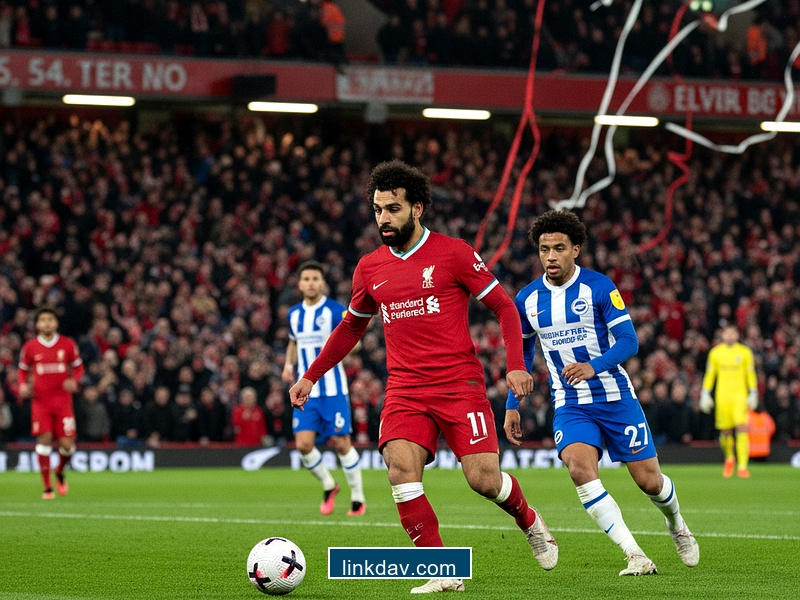
The three-match exile of Mohamed Salah was never just about rest. It was a statement. When a manager benches his highest earner and undisputed club legend for consecutive Premier League fixtures, he is not rotating; he is reasserting the hierarchy of the dressing room. Arne Slot, meticulous and system-obsessed, finally blinked first—or perhaps, he simply recalculated the risk.
News that the Egyptian King will return to the fold against Brighton confirms that the showdown talks at the AXA Training Ground yielded a resolution. Yet, to view this merely as a "player returns" story is to miss the fascinating tactical power struggle occurring beneath the surface. This is a classic conflict between the rigid geometry of a modern coaching system and the waning, yet potent, anarchy of an aging superstar.
The System vs. The Individual: Why Slot Pulled the Trigger
To understand why Salah was benched, one must ignore the goal charts and look at the heat maps against the ball. Arne Slot’s philosophy hinges on a collective, aggressive press that requires total synchronization. If one component fails to jump on the pressing trigger, the entire defensive structure collapses, leaving the backline exposed.
At 33, Salah has evolved. He is no longer the relentless hound of the early Klopp era. He conserves energy, lurking on the shoulder of the last defender, waiting for the transition. This "luxury" approach worked when the system was built entirely around him. Under Slot, the right-winger is expected to track back, invert to overload the midfield, and instigate the press from the front. Salah’s recent metrics showed a refusal—or inability—to adhere to these defensive metrics, creating a recurring weakness in the right channel that opposition analysts were beginning to exploit.
Slot’s decision to bench him was a cold, calculated move to prioritize structural integrity over individual brilliance. It was a gamble that highlighted a fundamental truth: Liverpool’s pressing intensity increased without Salah, even if their creative spark dimmed.
The Henderson Variable and the "Showdown"
The involvement of Jordan Henderson in this narrative is crucial. While Slot provides the tactical rigidity, Henderson represents the emotional intelligence of the previous regime. The revelation that Salah sought counsel from his former captain suggests the Egyptian felt isolated, perhaps even disrespected, by the new manager's ruthless pragmatism.
The "showdown talks" likely centered on a compromise. Slot cannot afford to lose the dressing room, nor can he afford to leave 20+ goals per season on the bench indefinitely. The agreement likely involves a tactical concession: Salah returns, but his role must change. He cannot simply hang on the wing. If he plays, the structure behind him must adapt—likely requiring the right-sided #8 (Szoboszlai or Elliott) to perform a "shuttler" role, doing the running of two men to cover Salah's defensive deficiencies.
The Stat Pack: The Decline of the Press
Data does not lie, and it supports Slot’s initial hesitation. Below is a comparison of Salah’s performance metrics from his peak Klopp years (2019/20) versus the current campaign. The drop-off in defensive activity is stark.
| Metric (Per 90) | 2019/20 Season | Current Season | Variance |
|---|---|---|---|
| Defensive Actions (Final 3rd) | 0.85 | 0.32 | -62% |
| Sprints per 90 | 18.4 | 11.2 | -39% |
| xG (Expected Goals) | 0.59 | 0.54 | Negligible Drop |
| Ball Recoveries | 3.4 | 1.8 | -47% |
The numbers paint the picture of a player who is still elite at scoring (xG remains consistent) but has effectively retired from the defensive side of the game. Slot’s benching of Salah was an attempt to rectify the -62% drop in final third defensive actions, a critical metric for a high-pressing side.
The Brighton Blueprint: High Risk, High Reward
Reintegrating Salah against Brighton is tactically fascinating. Brighton is notorious for baiting the press. They pass the ball along their own six-yard box, daring the opposition to commit bodies forward, only to slice through the lines and exploit the space left behind.
If Salah plays and does not press with 100% intensity, Brighton will bypass him effortlessly, creating a 2-vs-1 overload against Liverpool’s right-back. However, there is a counter-argument. Because Brighton pushes their defensive line so high during the build-up, the space *behind* their wing-backs is immense. This is the "Salah Zone."
Slot is likely gambling on a "mid-block" strategy. Instead of a frantic high press, Liverpool may sit slightly deeper, lure Brighton in, and use Salah exclusively as a transition weapon. It requires discipline from the other nine outfield players to carry the defensive load, but it maximizes Salah’s remaining elite attribute: devastating speed and finishing in open space.
Fan Pulse: The Pragmatism of the Kop
The mood on Merseyside has shifted from confusion to cautious pragmatism. The initial outrage at seeing Salah benched has cooled as fans witnessed the team struggle for fluidity in the final third without him. The consensus among the tactical communities on social media and the pubs around Anfield is clear:
"We respect the new manager's authority, but you don't keep a Ferrari in the garage just because it burns too much fuel. You just drive it differently."
Supporters are desperate for the three points against Brighton. They do not care about pressing stats or PPDA graphs; they care about the ball hitting the net. Salah remains the most reliable route to that outcome. The friction between Slot and Salah is tolerated, provided it produces results. If Salah starts and Liverpool loses due to a defensive lapse on the right flank, the toxicity will return. But if he scores the winner? Slot will be hailed as a genius of man-management.
This weekend isn't just a match; it is a public trial of Liverpool's new hierarchy. Can the Dutchman tame the King? Or does the King still hold the keys to the castle?
The three-match exile of Mohamed Salah was never just about rest. It was a statement. When a manager benches his highest earner and undisputed club legend for consecutive Premier League fixtures, he is not rotating; he is reasserting the hierarchy of the dressing room. Arne Slot, meticulous and system-obsessed, finally blinked first—or perhaps, he simply recalculated the risk.
News that the Egyptian King will return to the fold against Brighton confirms that the showdown talks at the AXA Training Ground yielded a resolution. Yet, to view this merely as a "player returns" story is to miss the fascinating tactical power struggle occurring beneath the surface. This is a classic conflict between the rigid geometry of a modern coaching system and the waning, yet potent, anarchy of an aging superstar.
The System vs. The Individual: Why Slot Pulled the Trigger
To understand why Salah was benched, one must ignore the goal charts and look at the heat maps against the ball. Arne Slot’s philosophy hinges on a collective, aggressive press that requires total synchronization. If one component fails to jump on the pressing trigger, the entire defensive structure collapses, leaving the backline exposed.
At 33, Salah has evolved. He is no longer the relentless hound of the early Klopp era. He conserves energy, lurking on the shoulder of the last defender, waiting for the transition. This "luxury" approach worked when the system was built entirely around him. Under Slot, the right-winger is expected to track back, invert to overload the midfield, and instigate the press from the front. Salah’s recent metrics showed a refusal—or inability—to adhere to these defensive metrics, creating a recurring weakness in the right channel that opposition analysts were beginning to exploit.
Slot’s decision to bench him was a cold, calculated move to prioritize structural integrity over individual brilliance. It was a gamble that highlighted a fundamental truth: Liverpool’s pressing intensity increased without Salah, even if their creative spark dimmed.
The Henderson Variable and the "Showdown"
The involvement of Jordan Henderson in this narrative is crucial. While Slot provides the tactical rigidity, Henderson represents the emotional intelligence of the previous regime. The revelation that Salah sought counsel from his former captain suggests the Egyptian felt isolated, perhaps even disrespected, by the new manager's ruthless pragmatism.
The "showdown talks" likely centered on a compromise. Slot cannot afford to lose the dressing room, nor can he afford to leave 20+ goals per season on the bench indefinitely. The agreement likely involves a tactical concession: Salah returns, but his role must change. He cannot simply hang on the wing. If he plays, the structure behind him must adapt—likely requiring the right-sided #8 (Szoboszlai or Elliott) to perform a "shuttler" role, doing the running of two men to cover Salah's defensive deficiencies.
The Stat Pack: The Decline of the Press
Data does not lie, and it supports Slot’s initial hesitation. Below is a comparison of Salah’s performance metrics from his peak Klopp years (2019/20) versus the current campaign. The drop-off in defensive activity is stark.
| Metric (Per 90) | 2019/20 Season | Current Season | Variance |
|---|---|---|---|
| Defensive Actions (Final 3rd) | 0.85 | 0.32 | -62% |
| Sprints per 90 | 18.4 | 11.2 | -39% |
| xG (Expected Goals) | 0.59 | 0.54 | Negligible Drop |
| Ball Recoveries | 3.4 | 1.8 | -47% |
The numbers paint the picture of a player who is still elite at scoring (xG remains consistent) but has effectively retired from the defensive side of the game. Slot’s benching of Salah was an attempt to rectify the -62% drop in final third defensive actions, a critical metric for a high-pressing side.
The Brighton Blueprint: High Risk, High Reward
Reintegrating Salah against Brighton is tactically fascinating. Brighton is notorious for baiting the press. They pass the ball along their own six-yard box, daring the opposition to commit bodies forward, only to slice through the lines and exploit the space left behind.
If Salah plays and does not press with 100% intensity, Brighton will bypass him effortlessly, creating a 2-vs-1 overload against Liverpool’s right-back. However, there is a counter-argument. Because Brighton pushes their defensive line so high during the build-up, the space *behind* their wing-backs is immense. This is the "Salah Zone."
Slot is likely gambling on a "mid-block" strategy. Instead of a frantic high press, Liverpool may sit slightly deeper, lure Brighton in, and use Salah exclusively as a transition weapon. It requires discipline from the other nine outfield players to carry the defensive load, but it maximizes Salah’s remaining elite attribute: devastating speed and finishing in open space.
Fan Pulse: The Pragmatism of the Kop
The mood on Merseyside has shifted from confusion to cautious pragmatism. The initial outrage at seeing Salah benched has cooled as fans witnessed the team struggle for fluidity in the final third without him. The consensus among the tactical communities on social media and the pubs around Anfield is clear:
"We respect the new manager's authority, but you don't keep a Ferrari in the garage just because it burns too much fuel. You just drive it differently."
Supporters are desperate for the three points against Brighton. They do not care about pressing stats or PPDA graphs; they care about the ball hitting the net. Salah remains the most reliable route to that outcome. The friction between Slot and Salah is tolerated, provided it produces results. If Salah starts and Liverpool loses due to a defensive lapse on the right flank, the toxicity will return. But if he scores the winner? Slot will be hailed as a genius of man-management.
This weekend isn't just a match; it is a public trial of Liverpool's new hierarchy. Can the Dutchman tame the King? Or does the King still hold the keys to the castle?