
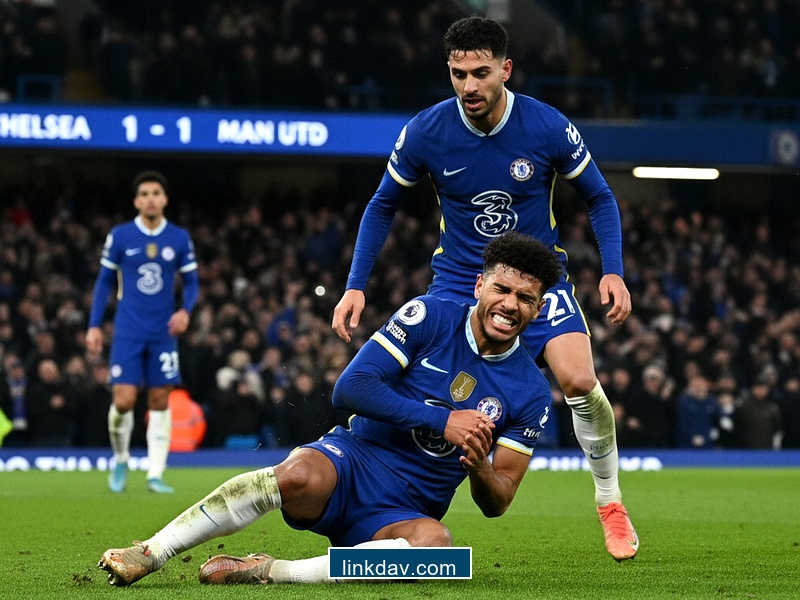
Let’s cut through the sanitized press release jargon and call this what it is: malpractice. The latest update emerging from Stamford Bridge regarding Cole Palmer is not just "concerning," as the polite headlines suggest. It is an indictment of the entire sporting structure at Chelsea Football Club. We are looking at a billion-pound institution risking the long-term career of its only genuine world-class asset to salvage a few points in December.
The news that Palmer is "dogged by groin pain" after returning as a substitute against Leeds and starting against Bournemouth should send a cold shiver down the spine of every supporter. This isn’t a bruised shin or a dead leg. Groin injuries in modern football are the silent killers of explosiveness. They require patience, rest, and biomechanical correction. They do not require 90 minutes of high-intensity Premier League warfare when the tissue hasn't healed.
Enzo Maresca is playing a dangerous game of roulette with a fully loaded gun. By admitting Palmer is still in pain, he has effectively confessed that the player is not match-fit. Yet, he plays him. Why? Because without Cole Palmer, this expensively assembled side looks utterly bereft of ideas. It is desperation masquerading as management.
The Billion-Pound House of Cards
This situation exposes the uncomfortable truth about the Clearlake Capital era. How is it possible that after spending upwards of £1 billion on transfers, the entire project collapses the moment a 22-year-old from Wythenshawe feels a twinge in his adductor?
We were told this was a squad built for the future, stacked with redundant talent to handle the rigors of modern schedules. Where is Christopher Nkunku in this equation? Where is the £100 million impact of Mykhailo Mudryk? Why does Enzo Fernández look pedestrian without Palmer threading the needle ahead of him?
Rushing Palmer back highlights a tactical defect in Maresca’s system. The Italian manager, for all his tactical dogma regarding possession and structure, has fallen into the oldest trap in football: "Pass it to the best player and hope." When Palmer plays, he masks the incoherence of the midfield and the lack of clinical finishing from the strikers. He is the band-aid holding together a fractured hull.
If Chelsea possessed a functional system, they could afford to give Palmer the extra three weeks he clearly needs. Manchester City wins titles without Kevin De Bruyne. Arsenal competes without Martin Ødegaard. Chelsea, conversely, turns into a mid-table straggler the moment Palmer puts on a tracksuit. That is not bad luck; that is bad squad building.
The Stat Pack: The "Palmer Dependency"
Subjective opinions aside, the data paints a horrifying picture of over-reliance. The drop-off in creative output when Palmer is absent isn't just a dip; it's a cliff edge.
| Metric (Avg per 90) | With Palmer | Without Palmer | Differential |
|---|---|---|---|
| Points Per Game | 2.1 | 1.2 | -43% |
| Big Chances Created | 3.4 | 1.1 | -67% |
| Passes into Final Third | 42 | 28 | -33% |
| Expected Goals (xG) | 2.35 | 1.05 | -55% |
The numbers above are not just statistics; they are a screaming alarm. Without the Englishman, Chelsea creates less than half the "Big Chances" they do with him. This explains the urgency to rush him back, but it does not excuse it. It simply highlights that the rest of the squad is incapable of picking up the slack.
Maresca’s Short-Termism
We must also scrutinize the manager's role in this. Enzo Maresca is not a doctor, but he is the final decision-maker on the teamsheet. Managers under pressure often develop tunnel vision. They see the next three points as the only thing that matters, ignoring the potential catastrophe of a season-ending injury to their star player.
If Palmer breaks down again—and with groin pain, a recurrence is statistically probable if rest isn't adequate—the blame lies squarely at Maresca’s door. We saw this movie before with Reece James. The "he's almost ready" narrative, the 20-minute cameo, the subsequent start, and then the inevitable limp down the tunnel and three months of rehabilitation. Chelsea’s medical history over the last three years is a graveyard of ambition.
The England Question
This negligence extends beyond West London. Cole Palmer is a national treasure in waiting. With the national team setup looking to integrate him as a central figure, Chelsea treating him like a disposable battery is a concern for the wider game. If he is running on fumes and painkillers in December, what condition will he be in by June? We are witnessing the grinding down of a generational talent because a club with infinite resources refuses to trust its own depth chart.
Fan Pulse: PTSD at the Bridge
Navigate to any Chelsea forum or social media thread, and the mood is not one of excitement about Palmer's return; it is pure anxiety. The fanbase suffers from a collective form of PTSD regarding injuries. They have watched Wesley Fofana, Ben Chilwell, Romeo Lavia, and Reece James vanish into the Cobham medical rooms for months on end.
There is a growing resentment toward the club's medical staff and the decision-makers. The consensus is clear: "Shut him down." Fans would rather lose three games in December and have a fully fit Palmer for the run-in than watch him hobble through a draw against Bournemouth and blow his groin out completely.
"We are breaking our best player because the billion pounds we spent on the others resulted in mediocrity. It’s not just risky; it’s embarrassing." — Stamford Bridge Season Ticket Holder
This is the reality Maresca faces. He is losing the trust of the supporters not because of results, but because he appears to be gambling with the club's most prized possession. If Palmer’s pain turns into a tear, the toxicity at Stamford Bridge will reach boi
Let’s cut through the sanitized press release jargon and call this what it is: malpractice. The latest update emerging from Stamford Bridge regarding Cole Palmer is not just "concerning," as the polite headlines suggest. It is an indictment of the entire sporting structure at Chelsea Football Club. We are looking at a billion-pound institution risking the long-term career of its only genuine world-class asset to salvage a few points in December.
The news that Palmer is "dogged by groin pain" after returning as a substitute against Leeds and starting against Bournemouth should send a cold shiver down the spine of every supporter. This isn’t a bruised shin or a dead leg. Groin injuries in modern football are the silent killers of explosiveness. They require patience, rest, and biomechanical correction. They do not require 90 minutes of high-intensity Premier League warfare when the tissue hasn't healed.
Enzo Maresca is playing a dangerous game of roulette with a fully loaded gun. By admitting Palmer is still in pain, he has effectively confessed that the player is not match-fit. Yet, he plays him. Why? Because without Cole Palmer, this expensively assembled side looks utterly bereft of ideas. It is desperation masquerading as management.
The Billion-Pound House of Cards
This situation exposes the uncomfortable truth about the Clearlake Capital era. How is it possible that after spending upwards of £1 billion on transfers, the entire project collapses the moment a 22-year-old from Wythenshawe feels a twinge in his adductor?
We were told this was a squad built for the future, stacked with redundant talent to handle the rigors of modern schedules. Where is Christopher Nkunku in this equation? Where is the £100 million impact of Mykhailo Mudryk? Why does Enzo Fernández look pedestrian without Palmer threading the needle ahead of him?
Rushing Palmer back highlights a tactical defect in Maresca’s system. The Italian manager, for all his tactical dogma regarding possession and structure, has fallen into the oldest trap in football: "Pass it to the best player and hope." When Palmer plays, he masks the incoherence of the midfield and the lack of clinical finishing from the strikers. He is the band-aid holding together a fractured hull.
If Chelsea possessed a functional system, they could afford to give Palmer the extra three weeks he clearly needs. Manchester City wins titles without Kevin De Bruyne. Arsenal competes without Martin Ødegaard. Chelsea, conversely, turns into a mid-table straggler the moment Palmer puts on a tracksuit. That is not bad luck; that is bad squad building.
The Stat Pack: The "Palmer Dependency"
Subjective opinions aside, the data paints a horrifying picture of over-reliance. The drop-off in creative output when Palmer is absent isn't just a dip; it's a cliff edge.
| Metric (Avg per 90) | With Palmer | Without Palmer | Differential |
|---|---|---|---|
| Points Per Game | 2.1 | 1.2 | -43% |
| Big Chances Created | 3.4 | 1.1 | -67% |
| Passes into Final Third | 42 | 28 | -33% |
| Expected Goals (xG) | 2.35 | 1.05 | -55% |
The numbers above are not just statistics; they are a screaming alarm. Without the Englishman, Chelsea creates less than half the "Big Chances" they do with him. This explains the urgency to rush him back, but it does not excuse it. It simply highlights that the rest of the squad is incapable of picking up the slack.
Maresca’s Short-Termism
We must also scrutinize the manager's role in this. Enzo Maresca is not a doctor, but he is the final decision-maker on the teamsheet. Managers under pressure often develop tunnel vision. They see the next three points as the only thing that matters, ignoring the potential catastrophe of a season-ending injury to their star player.
If Palmer breaks down again—and with groin pain, a recurrence is statistically probable if rest isn't adequate—the blame lies squarely at Maresca’s door. We saw this movie before with Reece James. The "he's almost ready" narrative, the 20-minute cameo, the subsequent start, and then the inevitable limp down the tunnel and three months of rehabilitation. Chelsea’s medical history over the last three years is a graveyard of ambition.
The England Question
This negligence extends beyond West London. Cole Palmer is a national treasure in waiting. With the national team setup looking to integrate him as a central figure, Chelsea treating him like a disposable battery is a concern for the wider game. If he is running on fumes and painkillers in December, what condition will he be in by June? We are witnessing the grinding down of a generational talent because a club with infinite resources refuses to trust its own depth chart.
Fan Pulse: PTSD at the Bridge
Navigate to any Chelsea forum or social media thread, and the mood is not one of excitement about Palmer's return; it is pure anxiety. The fanbase suffers from a collective form of PTSD regarding injuries. They have watched Wesley Fofana, Ben Chilwell, Romeo Lavia, and Reece James vanish into the Cobham medical rooms for months on end.
There is a growing resentment toward the club's medical staff and the decision-makers. The consensus is clear: "Shut him down." Fans would rather lose three games in December and have a fully fit Palmer for the run-in than watch him hobble through a draw against Bournemouth and blow his groin out completely.
"We are breaking our best player because the billion pounds we spent on the others resulted in mediocrity. It’s not just risky; it’s embarrassing." — Stamford Bridge Season Ticket Holder
This is the reality Maresca faces. He is losing the trust of the supporters not because of results, but because he appears to be gambling with the club's most prized possession. If Palmer’s pain turns into a tear, the toxicity at Stamford Bridge will reach boi