
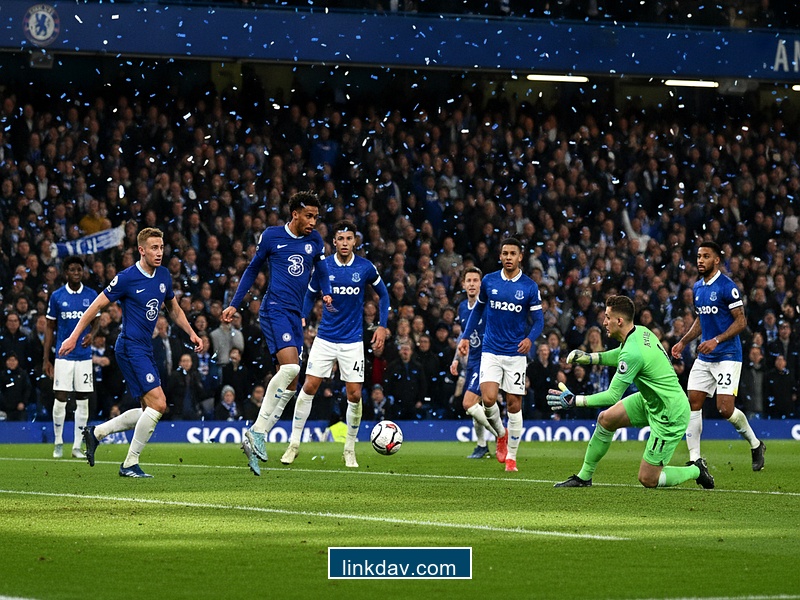
Let’s cut through the noise and look at the reality staring us in the face. We are looking at a fixture list that suggests Everton—a club that has spent the last three years flirting with financial oblivion and battling the Premier League’s lawyers—could finish the weekend sitting above Chelsea in the table. Read that again. If the Toffees secure a victory at Stamford Bridge, they leapfrog the "pride of London."
This shouldn't be possible. In a sane sporting ecosystem, a team assembled for over a billion pounds does not look over its shoulder at a team assembled with loan deals and sheer willpower. But we do not live in a sane ecosystem; we live in the bizarre reality of modern Premier League football, where Chelsea’s bloated extravagance is being schooled by Sean Dyche’s gravel-voiced minimalism. The betting markets are buzzing with offers—Midnite is throwing £30 in free bets at new punters—but the real gamble here is trusting Chelsea to behave like a serious football club.
The Maresca Experiment vs. The Dyche Doctrine
Enzo Maresca arrived at Stamford Bridge promising a distinct style, a tactical identity that was supposed to wash away the confusion of the previous regimes. What we have seen instead is possession without purpose. Maresca-ball, so far, looks like a luxury car with no engine—it looks expensive sitting in the driveway, but it struggles to get you to the grocery store.
Chelsea treats the ball like a precious artifact that must be polished; Everton treats the ball like a live grenade that must be launched into enemy territory. Sean Dyche knows exactly what his team is. They are unpretentious, physical, and direct. They thrive on the "second ball," the dark arts of set-pieces, and the psychological warfare of making the opponent uncomfortable.
The danger for Chelsea is profound. Maresca’s men want to play a chess match. Dyche wants a bar fight. If Chelsea cannot match the physical intensity that players like Abdoulaye Doucouré and James Tarkowski bring to the pitch, all the tactical diagrams in the world won't save them. This clash highlights the fundamental flaw in Chelsea’s recruitment: they bought talent, but they forgot to buy grit.
Deep Dive: The Economics of Failure
Why does this potential "leapfrogging" matter? Because it exposes the myth that money equals success in football. Chelsea’s strategy under Clearlake Capital has been to hoard young assets on eight-year contracts, assuming that value will inevitably increase. It is venture capitalism masquerading as sport.
Everton, conversely, represents the old school. forced by points deductions and financial constraints to rely on coaching and cohesion. If Everton wins, it validates the idea that a coherent team culture is superior to a collection of expensive individuals. A Chelsea loss here isn't just three points dropped; it is a systemic failure. It signals that despite outspending the rest of Europe, they are barely a mid-table side in terms of actual output.
Maresca is under pressure not because he is a bad coach, but because he is the current face of a bad project. He is trying to conduct an orchestra while the owners are selling the instruments and buying new ones mid-performance.
The Stat Pack: David vs. Goliath (If Goliath Was Drunk)
Numbers can be manipulated, but the raw data surrounding this matchup paints a stark picture of inefficiency versus efficiency.
| Metric | Chelsea (The Spenders) | Everton (The Survivors) |
|---|---|---|
| Estimated Squad Cost | £900m+ | ~£280m |
| Tactical Identity | High Possession / Slow Build | Low Block / Counter / Set Piece |
| Avg. Player Age | 23.4 (Inexperienced) | 27.1 (Prime/Veteran) |
| Aerial Duels Won % | 46% (Weakness) | 58% (Strength) |
The key stat here is the aerial duel percentage. Everton dominates the air; Chelsea is notoriously soft when the ball leaves the grass. If I were putting that £10 stake mentioned in the Midnite offer, I wouldn't be looking at a Chelsea clean sheet. I'd be looking at Tarkowski heading one in from a corner in the 85th minute.
Fan Pulse: The Toxicity Index
Walk around Fulham Broadway before kickoff, and you don't feel excitement. You feel anxiety. The Chelsea fanbase is exhausted. They are tired of learning new names every transfer window, tired of "transition years," and tired of being gaslit by PR statements. A loss to Everton turns the atmosphere at the Bridge from a library into a cauldron of dissent. The patience has evaporated.
"We used to fear playing Barcelona and Bayern Munich. Now we sweat about playing Everton at home. That is the legacy of this ownership." — A disillusioned Season Ticket Holder.
Everton fans, however, are riding a strange wave of defiant optimism. They have been punched in the gut repeatedly by regulators and inept previous owners, yet they are still standing. They travel in numbers, they are loud, and they smell fear. They know Chelsea is fragile. If the Toffees score first, the away end will make more noise than the rest of the stadium combined, further paralyzing a young Chelsea squad that lacks leadership.
The Bottom Line
The narrative going into Saturday is about betting offers and league position, but the subtext is about the soul of the game. Can a team built on grit and defensive organization dismantle a team built on algorithms and excess?
Chelsea should win. On paper, man for man, they have superior technical quality. But football is not played on paper, and certainly not on a balance sheet. It is played on grass, in the rain, under pressure. Enzo Maresca faces a defining moment. If he allows Everton to leapfrog his side, the questions about his tenure—and the entire Clearlake project—will stop being whispers and start being screams. Don't be surprised if the "upset" happens. In today's Premier League, Chelsea mediocrity is the only safe bet.
Let’s cut through the noise and look at the reality staring us in the face. We are looking at a fixture list that suggests Everton—a club that has spent the last three years flirting with financial oblivion and battling the Premier League’s lawyers—could finish the weekend sitting above Chelsea in the table. Read that again. If the Toffees secure a victory at Stamford Bridge, they leapfrog the "pride of London."
This shouldn't be possible. In a sane sporting ecosystem, a team assembled for over a billion pounds does not look over its shoulder at a team assembled with loan deals and sheer willpower. But we do not live in a sane ecosystem; we live in the bizarre reality of modern Premier League football, where Chelsea’s bloated extravagance is being schooled by Sean Dyche’s gravel-voiced minimalism. The betting markets are buzzing with offers—Midnite is throwing £30 in free bets at new punters—but the real gamble here is trusting Chelsea to behave like a serious football club.
The Maresca Experiment vs. The Dyche Doctrine
Enzo Maresca arrived at Stamford Bridge promising a distinct style, a tactical identity that was supposed to wash away the confusion of the previous regimes. What we have seen instead is possession without purpose. Maresca-ball, so far, looks like a luxury car with no engine—it looks expensive sitting in the driveway, but it struggles to get you to the grocery store.
Chelsea treats the ball like a precious artifact that must be polished; Everton treats the ball like a live grenade that must be launched into enemy territory. Sean Dyche knows exactly what his team is. They are unpretentious, physical, and direct. They thrive on the "second ball," the dark arts of set-pieces, and the psychological warfare of making the opponent uncomfortable.
The danger for Chelsea is profound. Maresca’s men want to play a chess match. Dyche wants a bar fight. If Chelsea cannot match the physical intensity that players like Abdoulaye Doucouré and James Tarkowski bring to the pitch, all the tactical diagrams in the world won't save them. This clash highlights the fundamental flaw in Chelsea’s recruitment: they bought talent, but they forgot to buy grit.
Deep Dive: The Economics of Failure
Why does this potential "leapfrogging" matter? Because it exposes the myth that money equals success in football. Chelsea’s strategy under Clearlake Capital has been to hoard young assets on eight-year contracts, assuming that value will inevitably increase. It is venture capitalism masquerading as sport.
Everton, conversely, represents the old school. forced by points deductions and financial constraints to rely on coaching and cohesion. If Everton wins, it validates the idea that a coherent team culture is superior to a collection of expensive individuals. A Chelsea loss here isn't just three points dropped; it is a systemic failure. It signals that despite outspending the rest of Europe, they are barely a mid-table side in terms of actual output.
Maresca is under pressure not because he is a bad coach, but because he is the current face of a bad project. He is trying to conduct an orchestra while the owners are selling the instruments and buying new ones mid-performance.
The Stat Pack: David vs. Goliath (If Goliath Was Drunk)
Numbers can be manipulated, but the raw data surrounding this matchup paints a stark picture of inefficiency versus efficiency.
| Metric | Chelsea (The Spenders) | Everton (The Survivors) |
|---|---|---|
| Estimated Squad Cost | £900m+ | ~£280m |
| Tactical Identity | High Possession / Slow Build | Low Block / Counter / Set Piece |
| Avg. Player Age | 23.4 (Inexperienced) | 27.1 (Prime/Veteran) |
| Aerial Duels Won % | 46% (Weakness) | 58% (Strength) |
The key stat here is the aerial duel percentage. Everton dominates the air; Chelsea is notoriously soft when the ball leaves the grass. If I were putting that £10 stake mentioned in the Midnite offer, I wouldn't be looking at a Chelsea clean sheet. I'd be looking at Tarkowski heading one in from a corner in the 85th minute.
Fan Pulse: The Toxicity Index
Walk around Fulham Broadway before kickoff, and you don't feel excitement. You feel anxiety. The Chelsea fanbase is exhausted. They are tired of learning new names every transfer window, tired of "transition years," and tired of being gaslit by PR statements. A loss to Everton turns the atmosphere at the Bridge from a library into a cauldron of dissent. The patience has evaporated.
"We used to fear playing Barcelona and Bayern Munich. Now we sweat about playing Everton at home. That is the legacy of this ownership." — A disillusioned Season Ticket Holder.
Everton fans, however, are riding a strange wave of defiant optimism. They have been punched in the gut repeatedly by regulators and inept previous owners, yet they are still standing. They travel in numbers, they are loud, and they smell fear. They know Chelsea is fragile. If the Toffees score first, the away end will make more noise than the rest of the stadium combined, further paralyzing a young Chelsea squad that lacks leadership.
The Bottom Line
The narrative going into Saturday is about betting offers and league position, but the subtext is about the soul of the game. Can a team built on grit and defensive organization dismantle a team built on algorithms and excess?
Chelsea should win. On paper, man for man, they have superior technical quality. But football is not played on paper, and certainly not on a balance sheet. It is played on grass, in the rain, under pressure. Enzo Maresca faces a defining moment. If he allows Everton to leapfrog his side, the questions about his tenure—and the entire Clearlake project—will stop being whispers and start being screams. Don't be surprised if the "upset" happens. In today's Premier League, Chelsea mediocrity is the only safe bet.