
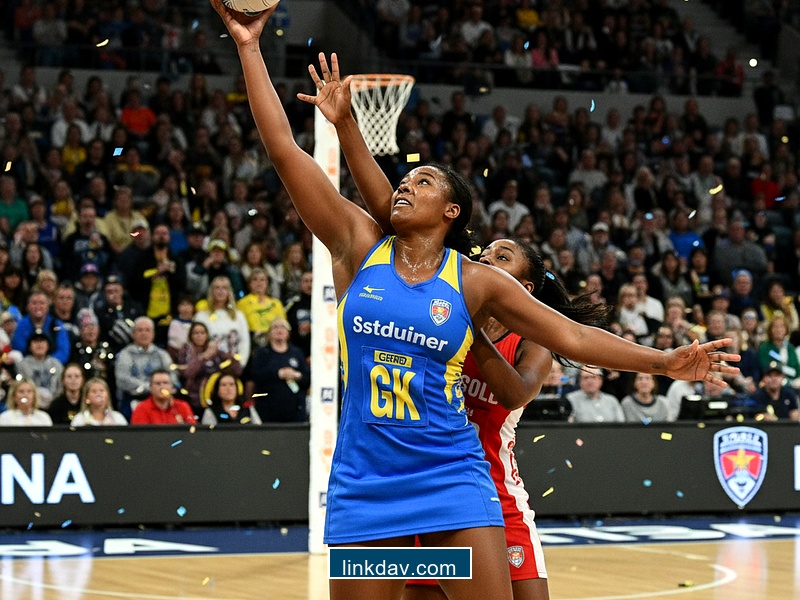
Sport has a funny way of recycling its own legends. Just when the book seems closed, a new chapter is scribbled in the margins, often in defiance of the established timeline. The announcement that Romelda Aiken-George will step into the goal circle for the West Coast Fever in 2026 is not merely a transfer news cycle update; it is a moment of profound historical symmetry for Australian netball.
The catalyst is joy—Jhaniele Fowler-Nembhard, the four-time MVP and the undisputed queen of the Super Netball era, is stepping away to welcome her second child. In previous decades, such an announcement might have signaled the twilight of a career. Today, thanks to the path forged by mothers like Gretel Bueta and Aiken-George herself, it is understood as a pause, not a full stop. Yet, the Fever faced an impossible arithmetic: how do you replace the statistical inevitability of Fowler-Nembhard?
The answer, ironically, was found in the very player Fowler-Nembhard eclipsed as the league’s premier target over half a decade ago.
The Troll and the Titan
It is a tedious predictability of modern fandom that Aiken-George’s signing was met with derision in the darker corners of social media. The "keyboard warriors," as they are affectionately known, pointed to her age and questioned her durability. They argued that Fever should have looked to youth, to the unproven, rather than the established.
Aiken-George’s response was swift and lacked the diplomatic filter that often waters down athlete interviews. She accused these detractors of throwing "little tantrums." It was a retort delivered with the same aerial confidence she used to dominate the Queensland Firebirds' circle for over a decade.
"People are upset? Good. Let them be upset. I have spent a career proving people wrong. The court does not care about your birth year; it cares about the ball going through the hoop."
From a historical vantage point, the criticism is absurd. We are witnessing an era of extended athletic prime. In basketball, LeBron James defies logic; in tennis, Djokovic held court well into his 30s. Netball is no different. Experience in the circle, particularly the ability to read the flight of the ball and position the body against defenders who are stronger and faster than ever, is a currency that does not devalue. Aiken-George is not the same player she was in 2011, but she possesses a veteran cunning that no rookie can replicate.
Deep Dive: The Sunshine Girl Swap
The tactical implications of this move are fascinating for those of us who study the game’s evolution. While both women hail from Jamaica and have defined the "tall shooter" archetype, they are fundamentally different weapons.
Fowler-Nembhard is the immovable object. Her game is built on supreme holding ability, creating a target that is mathematically impossible to defend if the feed is accurate. She requires the midcourt to work around her, to find the angle, and then release. It is a system of high efficiency but occasional rigidity.
Aiken-George, conversely, brings chaos. She has always been the rebounding queen of the league. Her game allows for—and sometimes encourages—the imperfect pass. She thrives on the scramble. Where Fowler-Nembhard demands perfection from her feeders, Aiken-George offers them salvation through her ability to retrieve lost causes.
For the Fever midcourt, specifically Alice Teague-Neeld, this requires a mental recalibration. They are moving from a target shooter to a contest shooter. In 2026, the Fever will likely lose percentage points in shooting accuracy, but they may gain possession stats through offensive rebounds—a trade-off that Dan Ryan will need to scheme for extensively.
The Stat Pack: A Duel of Eras
To understand the magnitude of this replacement, one must look at the raw data. These two women are the gold standard of the modern era. The table below illustrates the subtle differences in their dominance over their respective peak periods.
| Metric | J. Fowler-Nembhard (Peak Fever Era) | R. Aiken-George (Peak Firebirds Era) | Implication |
|---|---|---|---|
| Volume (Goals/Game) | 55 - 60 | 45 - 50 | Fever needs to find 10 goals elsewhere. |
| Accuracy | 94% - 97% | 82% - 88% | Efficiency drops; possession chains must increase. |
| Rebounds (Offensive) | Low (High conversion) | Very High (League Leader) | Second chances become Fever's new weapon. |
| Style | Static Holding | Mobile / Aerial | Midcourt spacing must adjust. |
The data reveals the truth: Fever is trading efficiency for resilience. Aiken-George will miss shots that Fowler-Nembhard would make, but she will likely recover balls that Fowler-Nembhard would not contest.
The Green Army Pulse
Fan sentiment in Western Australia is currently a cocktail of anxiety and begrudging respect. The "Green Army" has been spoiled. Since Fowler-Nembhard arrived from the Southern Steel, they have walked into RAC Arena knowing they possessed a cheat code. The anxiety stems from the loss of that security blanket.
However, the "tantrums" Aiken-George refers to are largely external noise. True students of the game within the Fever fanbase recognize the coup this represents. In a market where high-quality shooters are as rare as humility in a post-match interview, securing a legend to replace a legend is exceptional management.
- The Optimist View: "We got the only player on earth with the experience to handle the pressure of replacing Jhaniele."
- The Pessimist View: "We are relying on a player past her prime to maintain a championship window that might be closing."
- The Realist View: "It’s a gap year. We compete, we stay relevant, and we prepare for the return of the Queen in 2027."
A Question of Legacy
What we are seeing here is the continued dominance of the Jamaican school of netball. For two decades, the Sunshine Girls have exported their talent
Sport has a funny way of recycling its own legends. Just when the book seems closed, a new chapter is scribbled in the margins, often in defiance of the established timeline. The announcement that Romelda Aiken-George will step into the goal circle for the West Coast Fever in 2026 is not merely a transfer news cycle update; it is a moment of profound historical symmetry for Australian netball.
The catalyst is joy—Jhaniele Fowler-Nembhard, the four-time MVP and the undisputed queen of the Super Netball era, is stepping away to welcome her second child. In previous decades, such an announcement might have signaled the twilight of a career. Today, thanks to the path forged by mothers like Gretel Bueta and Aiken-George herself, it is understood as a pause, not a full stop. Yet, the Fever faced an impossible arithmetic: how do you replace the statistical inevitability of Fowler-Nembhard?
The answer, ironically, was found in the very player Fowler-Nembhard eclipsed as the league’s premier target over half a decade ago.
The Troll and the Titan
It is a tedious predictability of modern fandom that Aiken-George’s signing was met with derision in the darker corners of social media. The "keyboard warriors," as they are affectionately known, pointed to her age and questioned her durability. They argued that Fever should have looked to youth, to the unproven, rather than the established.
Aiken-George’s response was swift and lacked the diplomatic filter that often waters down athlete interviews. She accused these detractors of throwing "little tantrums." It was a retort delivered with the same aerial confidence she used to dominate the Queensland Firebirds' circle for over a decade.
"People are upset? Good. Let them be upset. I have spent a career proving people wrong. The court does not care about your birth year; it cares about the ball going through the hoop."
From a historical vantage point, the criticism is absurd. We are witnessing an era of extended athletic prime. In basketball, LeBron James defies logic; in tennis, Djokovic held court well into his 30s. Netball is no different. Experience in the circle, particularly the ability to read the flight of the ball and position the body against defenders who are stronger and faster than ever, is a currency that does not devalue. Aiken-George is not the same player she was in 2011, but she possesses a veteran cunning that no rookie can replicate.
Deep Dive: The Sunshine Girl Swap
The tactical implications of this move are fascinating for those of us who study the game’s evolution. While both women hail from Jamaica and have defined the "tall shooter" archetype, they are fundamentally different weapons.
Fowler-Nembhard is the immovable object. Her game is built on supreme holding ability, creating a target that is mathematically impossible to defend if the feed is accurate. She requires the midcourt to work around her, to find the angle, and then release. It is a system of high efficiency but occasional rigidity.
Aiken-George, conversely, brings chaos. She has always been the rebounding queen of the league. Her game allows for—and sometimes encourages—the imperfect pass. She thrives on the scramble. Where Fowler-Nembhard demands perfection from her feeders, Aiken-George offers them salvation through her ability to retrieve lost causes.
For the Fever midcourt, specifically Alice Teague-Neeld, this requires a mental recalibration. They are moving from a target shooter to a contest shooter. In 2026, the Fever will likely lose percentage points in shooting accuracy, but they may gain possession stats through offensive rebounds—a trade-off that Dan Ryan will need to scheme for extensively.
The Stat Pack: A Duel of Eras
To understand the magnitude of this replacement, one must look at the raw data. These two women are the gold standard of the modern era. The table below illustrates the subtle differences in their dominance over their respective peak periods.
| Metric | J. Fowler-Nembhard (Peak Fever Era) | R. Aiken-George (Peak Firebirds Era) | Implication |
|---|---|---|---|
| Volume (Goals/Game) | 55 - 60 | 45 - 50 | Fever needs to find 10 goals elsewhere. |
| Accuracy | 94% - 97% | 82% - 88% | Efficiency drops; possession chains must increase. |
| Rebounds (Offensive) | Low (High conversion) | Very High (League Leader) | Second chances become Fever's new weapon. |
| Style | Static Holding | Mobile / Aerial | Midcourt spacing must adjust. |
The data reveals the truth: Fever is trading efficiency for resilience. Aiken-George will miss shots that Fowler-Nembhard would make, but she will likely recover balls that Fowler-Nembhard would not contest.
The Green Army Pulse
Fan sentiment in Western Australia is currently a cocktail of anxiety and begrudging respect. The "Green Army" has been spoiled. Since Fowler-Nembhard arrived from the Southern Steel, they have walked into RAC Arena knowing they possessed a cheat code. The anxiety stems from the loss of that security blanket.
However, the "tantrums" Aiken-George refers to are largely external noise. True students of the game within the Fever fanbase recognize the coup this represents. In a market where high-quality shooters are as rare as humility in a post-match interview, securing a legend to replace a legend is exceptional management.
- The Optimist View: "We got the only player on earth with the experience to handle the pressure of replacing Jhaniele."
- The Pessimist View: "We are relying on a player past her prime to maintain a championship window that might be closing."
- The Realist View: "It’s a gap year. We compete, we stay relevant, and we prepare for the return of the Queen in 2027."
A Question of Legacy
What we are seeing here is the continued dominance of the Jamaican school of netball. For two decades, the Sunshine Girls have exported their talent