
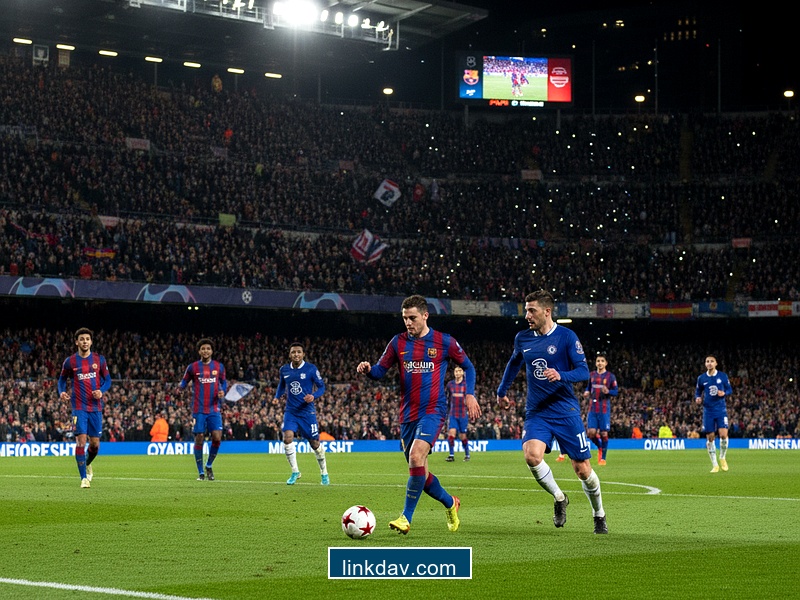
The Champions League anthem is quickly distorting into a funeral march for two of Europe’s most financially leveraged institutions. Barcelona and Chelsea stand on a jagged precipice where elimination signifies an economic catastrophe far outweighing any sporting disappointment. We are witnessing the terrifying calm before a seismic shift that will fracture squad rosters and shatter managerial tenures.
| The Institution | The Financial Risk | Projected Fallout |
|---|---|---|
| FC Barcelona | €20m+ Revenue Void | Forced Asset Liquidation |
| Chelsea FC | FFP/PSR Breach | January Fire Sale |
| The Managers | Reputational Bankruptcy | Immediate Termination |
Why The Numbers Matter
Ignore the coefficient points. Forget the coefficient rankings. The numbers that truly matter sit on the balance sheets in Catalonia and West London. The mathematics of modern football does not forgive failure at this level. When a club builds a wage structure predicated on reaching the Champions League quarter-finals, crashing out in the group stage is not a hiccup; it is a structural failure. It creates a deficit that sponsorship deals cannot plug.
For the neutral, this is drama. For the boardrooms involved, this is the nightmare scenario coming to life. The scenarios required for advancement are complex, but the consequence of failure is brutally simple: austerity. If these giants fall, the upcoming transfer windows will transform from periods of acquisition into desperate attempts to offload wages to keep the lights on.
Catalonia’s House of Cards
Barcelona’s gamble was historic. Joan Laporta pulled economic levers with the frantic energy of a man trying to stop a dam from bursting with his bare hands. They sold future TV rights and studio assets to fund a squad designed to win *now*. The entire business model relies on European dominance.
If they fail to advance, the narrative shifts instantly. We are not talking about a disappointing season; we are discussing the potential dismantling of the squad. Sources close to the club suggest that a group stage exit forces the club to sell a key asset—perhaps a Gavi or a Pedri—just to balance the books for La Liga’s strict salary cap next season. The Europa League does not pay the bills for Robert Lewandowski’s contract.
The manager knows this. You can see it in the tension on the touchline. This isn't about tactics anymore; it is about survival. If Barcelona drops into the Europa League, the resulting financial hole exceeds €20 million in lost prize money and matchday revenue. But the damage to the brand—the inability to attract sponsors who demand elite exposure—is incalculable.
The Stamford Bridge Implosion
Across the channel, Chelsea faces a different beast, but one with equally sharp teeth. The new ownership group has spent over a billion pounds, amortizing contracts over seven or eight years to skirt immediate FFP violations. This strategy works only if the club consistently generates elite revenue.
"This project was built on the assumption of Champions League perpetuity. Without it, the amortization model collapses on itself."
Failure to advance creates a toxic cocktail. You have a bloated squad of unhappy stars receiving fewer minutes, combined with a sudden drop in revenue. This leads to one outcome: a locker room mutiny. When players realize the club must sell to survive, loyalty evaporates. Agents start making calls. The cohesion required to rescue a domestic league campaign vanishes.
<p style="font-size: 1.125rem; line-height: 1.8; color: #374151; margin-bottom: 1.5rem; font-famil