
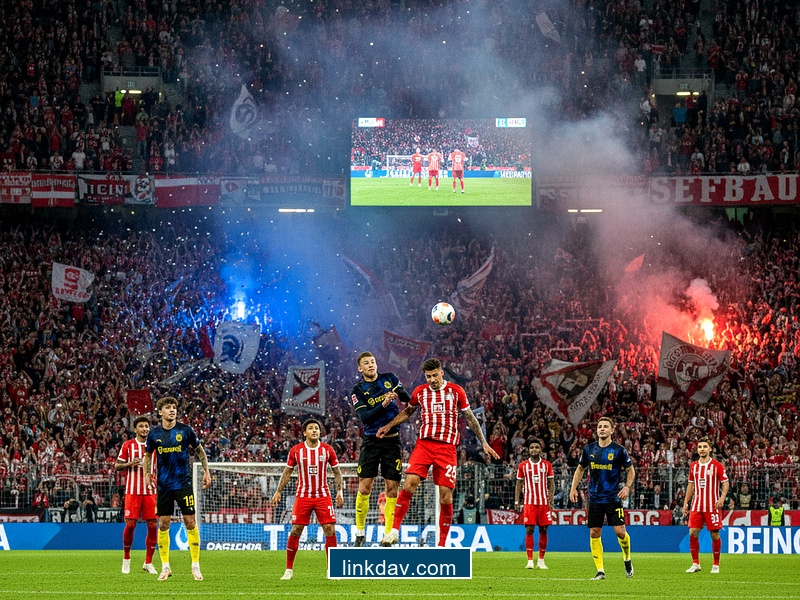
If you are looking at the Bulinews fantasy recommendations for Matchday 15, you are likely staring at a list populated by the usual suspects: Harry Kane, Omar Marmoush, perhaps a Florian Wirtz or a Serhou Guirassy. To the casual observer, these are just in-form players riding a hot streak. To the analytical eye, however, these fantasy point hauls are merely the symptoms of a much deeper, more volatile tactical shift gripping the Bundesliga.
We are halfway through the 2024/25 campaign, and the league has abandoned pragmatism. We are witnessing a clash of managerial philosophies that prioritize high-risk verticality over control. The "Project" at the top clubs is no longer about clean sheets; it is about outscoring your own defensive fragility. As we approach the winter break, we must look past the individual statistics and dissect the managerial architectures allowing these players to thrive—and question whether these systems are actually sustainable.
The Kompany Gamble: Brilliance on the Edge of a Cliff
Vincent Kompany’s appointment at Bayern Munich was met with skepticism, bordering on derision, by the German press. A relegated manager taking over the Rekordmeister? Yet, by Matchday 15, the narrative has shifted from competence to dominance. However, fantasy managers banking on Bayern’s attack are profiting from a system that is historically distinct from the Flick or Nagelsmann eras.
Kompany has installed a defensive line so high it virtually sits in the opposition’s half. This isn't just pressing; it is tactical compression designed to suffocate. Unlike Guardiola’s Manchester City, which seeks control through possession to minimize transitions, Kompany’s Bayern invites chaos to exploit it. They want the ball to turn over so they can counter-press immediately in the final third.
"The risk isn't a bug in the system; it is the feature. Kane isn't scoring because he's a poacher; he's scoring because Bayern plays the game in a 30-meter strip of grass around the opponent's box."
Is this sustainable? Domestically, yes. The average Bundesliga side lacks the technical precision to escape Bayern’s "rest defense" (the structure of players behind the ball). But there is a fragility here. We saw glimpses of it against Frankfurt earlier in the season and in Europe. When the first line of pressure is broken, Dayot Upamecano and Min-jae Kim are left defending vast acres of space in one-on-one duels. It is a high-wire act. For now, the sheer volume of chances created makes Kane and Musiala essential assets, but do not mistake this for the impregnable Bayern of 2013 or 2020. This is a team built to win 4-2, not 1-0.
Toppmöller’s "Heavy Metal" Revival
If you have Omar Marmoush in your fantasy squad, you aren't a genius; you're just paying attention. But the Egyptian’s explosion is directly attributable to Dino Toppmöller finally exorcising the ghosts of possession football at Eintracht Frankfurt. Last season, Toppmöller was criticized for a slow, sterile style that betrayed the club's DNA. Frankfurt fans demand Powerfussball.
This season represents a massive pivot. Toppmöller has essentially resurrected the spirit of the "Büffelherde" (Buffalo Herd) era of 2018—when Haller, Jović, and Rebić tore the league apart. The current setup, utilizing Marmoush and Hugo Ekitiké, relies on rapid vertical transitions. The philosophy has shifted from "control the ball" to "attack the space."
Statistically, Frankfurt is overperforming their Expected Goals (xG) by a margin that usually suggests a crash is imminent. However, when you analyze the types of chances created, the sustainability argument becomes complex. They aren't scoring wonder goals from 30 yards; they are scoring from high-probability breakaway situations created by inviting pressure and bypassing midfield. Toppmöller has realized that his squad lacks a Granit Xhaka-type controller, so he has bypassed the need for one entirely. It is reactive, ruthless, and perfectly suited to Marmoush’s skill set. The project here is distinct: turning Frankfurt into the league's ultimate counter-puncher.
The Identity Crisis in Dortmund
Contrast the clarity of Bayern and Frankfurt with the murky waters of Borussia Dortmund. Nuri Şahin’s tenure thus far has been a study in contradiction. If you are picking Serhou Guirassy, you are banking on individual brilliance rescuing a broken system. The "Project" at BVB currently feels non-existent.
Historically, Dortmund thrived under managers like Klopp or Tuchel who had a rigid, identifiable philosophy. Şahin, a rookie at this level, seems caught between two minds: the desire to play possession football and the reality of a squad built for transition. The team’s home form versus away form highlights a mental fragility that tactical tweaks haven't fixed. At the Westfalenstadion, the crowd drives the intensity. Away, without that emotional crutch, the lack of tactical structure is exposed.
| Club | Manager | Core Philosophy | Primary Vulnerability |
|---|---|---|---|
| Bayern Munich | Vincent Kompany | Suffocation Pressing (High Line) | Long balls behind the defense |
| Frankfurt | Dino Toppmöller | Vertical Transitions (Chaos) | Low-block teams denying space |
| Leverkusen | Xabi Alonso | Control & Overloads | Mental fatigue / Predictability |
| Dortmund | Nuri Şahin | Individual Moments | Lack of systemic coherence |
The fantasy numbers for Dortmund players are deceptive. They suggest a top-tier attack, but the underlying metrics show a team struggling to progress the ball through the middle third. Guirassy is feeding on scraps, not service. This is not a sustainable project; it is a house of cards waiting for a gust of wind.
Alonso’s Difficult Second Album
We cannot ignore Bayer Leverkusen. Xabi Alonso’s "Invincibles" have looked decidedly mortal this season. The fantasy tips still point to Wirtz and Grimaldo, and rightly so, but the context has changed. Last year, Leverkusen suffocated teams with possession, barely allowing shots on their own goal. This year, they are leaking goals at a relegation-level rate in defensive transitions.
The issue isn't tactical incompetence; it's adaptation. The Bundesliga has figured out the Alonso code. Teams are no longer pressing Leverkusen high; they are sitting deep, engaging in a low block, and forcing Leverkusen to play in front of them. This neutralizes the explosive pace of Frimpong and Grimaldo. Alonso’s project is facing its first true existential crisis: can he evolve? The current reliance on last-minute winners is not a tactic; it’s a depletion of luck reserves. For fantasy managers, Grimaldo remains a set-piece god, but the clean sheet points that bolstered his value last year are gone.
The Verdict: Embrace the Variance
The players listed in the Bulinews tips—Kane, Marmoush, Wirtz—are not just points magnets; they are the beneficiaries of a league-wide tactical shift toward offense at the expense of stability. The Bundesliga has always been a transition league, but Matchday 15 of the 2024/25 season sees this tendency dialled up to eleven.
Managers like Kompany and Toppmöller have looked at the modern game and decided that perfect control is a myth. Instead, they are engineering teams designed to out-shoot the opponent in a shootout. It makes for fantastic television and high-scoring fantasy weeks. But when we talk about "projects," we usually imply long-term stability.
Right now, only one team looks like it is building a dynasty, and that is Bayern—simply because their "risk" is backed by world-class talent in every position. For Frankfurt and Stuttgart, the crash will eventually come when variance evens out. For Dortmund, the crash has already happened; they just haven't looked at the wreckage yet. Pick your players accordingly, but understand that this season, the managers are rolling the dice just as much as you are.