
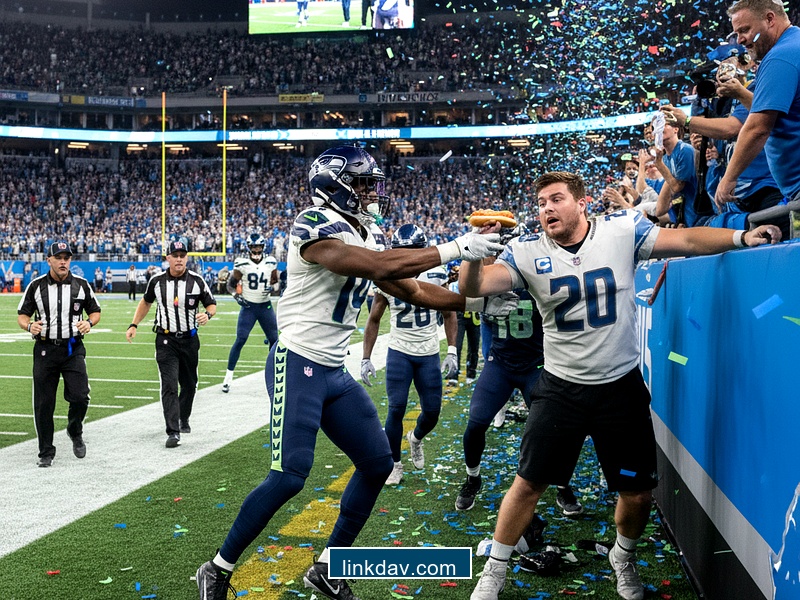
The footage from Detroit is grainy, ugly, and depressingly predictable. DK Metcalf, clad in the black and gold of the Pittsburgh Steelers, reaching into the stands to strike a Lions fan is not merely a legal headache or a suspension-pending disaster. It is the violent, inevitable crescendo of Mike Tomlin’s most dangerous managerial gamble.
When the Steelers acquired Metcalf, the transaction was viewed through the lens of fantasy football potential and physical measurables. But looking at the sideline skirmish at Ford Field, we aren't seeing a momentary lapse in judgment. We are witnessing the total bankruptcy of the modern Steelers' philosophy: the belief that talent can perpetually subsidize toxicity.
This incident forces us to look past the 90 minutes of football and interrogate the "Project" in Pittsburgh. For too long, the narrative surrounding Mike Tomlin has been that he is the ultimate manager of men, the only coach capable of corraling volatile personalities. The Metcalf incident suggests that the "Standard" is no longer the Standard. The Standard is now survival, and the cost is the franchise's dignity.
The Fetishization of the "Project" Receiver
To understand how Metcalf ends up throwing a punch in Detroit, you have to trace the lineage of the Steelers' roster construction over the last decade. Kevin Colbert and now Omar Khan, with Tomlin’s blessing, have developed an addiction to distressed assets at the wide receiver position. This isn't accidental; it is a calculated market inefficiency strategy that has gone septic.
Historically, Pittsburgh drafts or acquires receivers who possess elite physical traits but carry "red flags"—whether character concerns, lack of focus, or emotional volatility. The theory is simple: The Steelers' culture is so strong, so immutable, that it will metabolize the player’s ego and leave only the production. We saw it with Santonio Holmes. We saw the apex of it with Antonio Brown. We watched the deterioration with Chase Claypool and George Pickens.
Metcalf was supposed to be the latest reclamation project. The Seahawks, under a new regime looking to replicate the Baltimore Ravens' disciplined defensive culture, identified Metcalf as a luxury they could no longer afford. Seattle recognized that a locker room requires emotional equilibrium. Pittsburgh, in their hubris, believed they could fix him.
"The Steelers have confused 'managing' a player with 'enabling' him. When you build an offense that requires your receivers to be emotional terrorists to function, you don't get to act surprised when the bomb goes off."
Tactically, this reliance on volatile alpha receivers masks a deficiency in schematic innovation. Under offensive coordinator Arthur Smith, the Steelers rely heavily on isolation routes and contested catches outside the numbers. They don't scheme players open with the mesmerizing geometry of a Kyle Shanahan or the motion-heavy misdirection of Sean McVay. They play "bully ball." They require physical freaks to win one-on-one battles to salvage broken plays.
This tactical necessity grants players like Metcalf immense leverage. They know the offense cannot function without their specific brand of chaos. Tomlin empowers them because his scheme depends on them. It creates a feedback loop where the player feels bigger than the shield.
The Erosion of the Rooney Rule (of Law)
There is a stark difference between a sideline tantrum—throwing a tablet or yelling at a position coach—and physically engaging a fan. The former is a distraction; the latter is an existential threat to the business of the NFL. The Rooney family has long prized itself on a stoic, almost aristocratic approach to ownership. They tolerate eccentrics; they do not tolerate liabilities.
When Ron Artest went into the stands at the Palace of Auburn Hills in 2004, it changed the NBA's relationship with security and fan interaction forever. While Metcalf’s swing didn't spark a riot of that magnitude, the geography is hauntingly similar, and the implications are identical. This crosses the rubicon from "passion" to assault.
Mike Tomlin’s philosophy has always been "us against the world." It is a powerful motivator. It circles the wagons. But when the enemy shifts from the opposing defense to the paying customers, the philosophy has cannibalized itself. Tomlin’s refusal to discipline George Pickens for lack of effort in previous seasons set a precedent. Metcalf likely looked at the history of the room he walked into and realized there were no guardrails.
Seattle’s Vindicated Pragmatism
We must take a moment to credit the Seattle Seahawks' front office. When the trade occurred, pundits claimed Seattle was surrendering. In reality, they were sanitizing. The Seahawks understood a fundamental truth about modern team building that Pittsburgh has ignored: scalability requires stability.
Under their current structure, Seattle moved toward a diverse distribution of targets and a culture where the system elevates the player, not the other way around. By exorcising the Metcalf volatility, they removed the ceiling on their offensive potential but raised the floor of their locker room cohesion. They chose the Patriot Way (in its prime) over the chaotic stars-and-scrubs approach.
Pittsburgh, conversely, is operating on a outdated model from the mid-2000s. They believe that a strong head coach is a panacea for all personality defects. But Tomlin is 20 years into his tenure. The voice that once commanded absolute respect is now just part of the furniture to these young stars. The "Tomlin Magic" worked when the roster had veterans like Troy Polamalu and Heath Miller to enforce the culture from within. Those deputies are long gone. Now, it’s just Tomlin on an island, trying to talk down players who have more Instagram followers than he has wins.
The Verdict on the Tomlin Project
Is this sustainable? Absolutely not. The Steelers have been stuck in the mud of mediocrity—never terrible enough to draft a franchise-altering quarterback, never good enough to contend for a Super Bowl—precisely because of this philosophy. They chase the high-variance players to bridge the talent gap, which keeps them competitive but culturally rot-prone.
The incident in Detroit is not an outlier; it is the bill coming due. If the Steelers do not act decisively—not just with a suspension, but with a fundamental re-evaluation of their acquisition strategy—they will cease to be the Pittsburgh Steelers of lore. They will become the AFC's version of the late-era Dallas Cowboys: a reality TV show disguised as a football team, prioritizing headlines over hardware.
Mike Tomlin is a Hall of Fame coach. But his blind spot for "troubled talent" has grown into a cataract. He believes he can save everyone. He believes the "Steeler Way" is a rehabilitation center. But as DK Metcalf was escorted away from the stands in Detroit, it became painfully clear: The patients are running the asylum, and the institution is crumbling.