
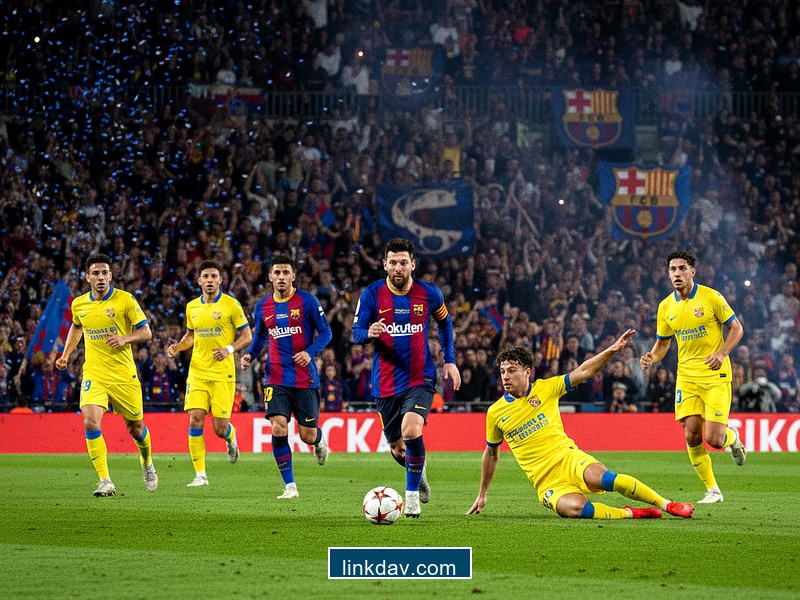
When the team sheet dropped for Barcelona’s trip to La Cerámica to face Villarreal, it wasn't just a list of names; it was a declaration of intent that eerily mirrors the philosophical pivot point of the club nearly two decades ago. Hansi Flick has named a starting XI that doesn't just rely on youth—it weaponizes it.
We are looking at a lineup that forces us to confront a startling reality: the frantic necessity of 2024 has recreated the courageous idealism of 2008. For twenty years, I have covered the rise, the zenith, and the slow, agonizing stagnation of the Blaugrana. Today’s selection suggests the stagnation is over, replaced by a high-wire act that is as thrilling as it is dangerous.
The Ghost of Pep’s First Year
To understand the gravity of this XI, you must look back to September 2008. Pep Guardiola, fresh from the B team, dropped experienced campaigners to field a lanky, awkward pivot named Sergio Busquets against Racing Santander. The stadium groaned. The pundits sneered. The result was a draw, but the revolution had begun.
Flick’s selection today carries that same distinct scent of revolution. By placing his trust in the teenage spine of Lamine Yamal, Pau Cubarsí, and the midfield engine room of La Masia graduates, he is bypassing the "transition" phase entirely. This isn't a team being built for tomorrow; it is a team being told they are good enough for today. The comparison isn't lazy journalism; it’s a structural reality.
"Barcelona has always oscillated between buying Galacticos and trusting the academy. The current financial shackles have forced them back to their moral north star. This XI is the most 'Cruyffian' necessity since the Dream Team era."
Lamine Yamal vs. The Messi Burden
We need to stop whispering about the Lionel Messi comparisons and analyze the tactical divergence. When Messi broke into the 2005-2006 team under Frank Rijkaard, he was a luxury component in a machine powered by Ronaldinho and Deco. He was the cherry, not the cake.
Lamine Yamal, starting on the right against Villarreal’s notoriously compact low block, faces a burden Messi didn't have until 2010. Yamal is the primary outlet. The tactical setup under Flick isolates Yamal differently than Guardiola did Messi. Guardiola used Dani Alves to overlap and create chaos; Flick demands Yamal hold width and create from a standing start, much closer to the role of a prime Luis Figo but with an inverted drive.
If Yamal is to survive the physicality of Villarreal’s left flank, he must learn the lesson Messi mastered in 2009: conservation of energy. This XI puts immense defensive responsibility on the teenager, something Rijkaard shielded Messi from.
The High Line: Suicide or Genius?
The most terrifying aspect of this lineup is the defensive configuration. Pairing Cubarsí with Iñigo Martínez (or a recovering Araújo context-depending) against Villarreal’s transition speed is a tactical gamble that borders on arrogance. And I love it.
This is the "Puyol Doctrine" revisited. In 2009, Carles Puyol and Gerard Piqué played a defensive line effectively at the halfway line. They could do this because their recovery pace was elite and Victor Valdés swept effectively. Flick is asking the same of this current backline, but with a twist: the offside trap.
This team is catching opponents offside at a rate we haven't seen since the Arrigo Sacchi Milan days. Against Villarreal, a team that thrives on the shoulder of the last defender, this is high-risk poker. If the press in midfield fails—if Pedri or Casadó are bypassed—the backline is exposed. This isn't the possession-based defense of 2011 (tiki-taka); this is Gegenpressing defense. Win the ball back in 5 seconds or foul.
The Engine Room: Verticality Over Control
Here lies the biggest divergence from the golden era. The midfield trio selected for this clash represents a shift from "La Pausa" (the pause) to "La Furia" (the fury). Xavi and Iniesta killed you with a thousand cuts; they anesthetized the opponent. This current midfield, under Flick’s German tutelage, wants to punch you in the throat.
| Tactical Attribute | 2011 Midfield (Xavi/Iniesta/Busquets) | 2024 Midfield (Pedri/Casadó/Olmo/Gavi) |
|---|---|---|
| Tempo | Andante (Slow, rhythmic) | Allegro (Fast, vertical) |
| Defensive Shape | Position-based containment | Man-oriented pressing |
| Primary Goal | Control possession (70%+) | Create chances via turnover |
Against Villarreal, who possess technically gifted midfielders like Parejo (a relic of the old style), Flick’s XI is designed to overrun, not out-pass. It’s a physical challenge. The selection of Marc Casadó or Marc Bernal in the pivot role is particularly significant. They are being asked to do the Sergio Busquets role but without the luxury of time. Busquets had Xavi to receive the ball; these kids have to turn and drive.
Lewandowski: The Eto'o Function
Robert Lewandowski’s presence in this XI provides the veteran ballast, much like Samuel Eto’o did for the 2008 squad. However, the tactical utility differs. Eto’o was chaos; he pressed goalkeepers into errors and ran the channels. Lewandowski is playing as a fulcrum.
In this Villarreal clash, Lewandowski’s role is closer to the 2014-15 version of Luis Suárez. He is there to pin the center-backs, creating the pockets of space for Raphinha and Yamal to exploit. The criticism that Lewandowski is "too old" misses the point. You don't play him for 90 minutes of pressing; you play him for the one second inside the box where his pulse drops while everyone else’s rises.
The Verdict
This starting XI is not perfect. It lacks the bench depth of the 2011 squad and the sheer intimidation factor of the MSN (Messi-Suarez-Neymar) era. But it possesses something Barcelona has lacked since the debacle at Anfield: hunger.
By fielding this lineup at La Cerámica, Flick is sending a message that reputation no longer dictates selection. We are witnessing the fusion of La Masia’s technical arrogance with the biomechanical efficiency of modern German football. If they win, it validates a new era. If they lose, it will be chalked up to youth.
But make no mistake: looking at the names on this sheet, the ghost of the past isn't haunting Barcelona anymore. It’s guiding them.